
Pastāsti draugiem par šo preci:
The Homeric Hymns Andrew Lang
Mūsu klienti saka:


Pieejams arī kā:
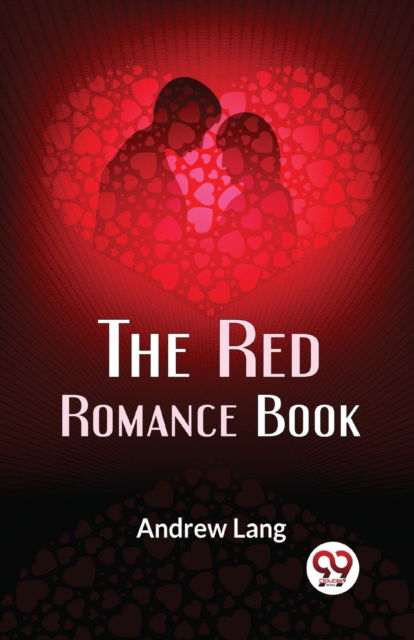
The Homeric Hymns
Andrew Lang
Book Excerpt: ies of similar plausibility and value. Meanwhile Baumeister argues that the Pythian Hymn (our second part) is animitation of the Delian; by a follower, not of Homer, but of Hesiod. Thus, the Hesiodic school was closely connected with Delphi; the Homericwith Ionia, so that Delphi rarely occurs in the Epics; in fact onlythrice (I. 405, [Greek text]. 80, [Greek text]. 581). The localknowledge is accurate (Pythian Hymn, 103 sqq.). These are locallegends, and knowledge of the curious chariot ritual of Onchestus. TheMuses are united with the Graces as in a work of art in the Delphiantemple. The poet chooses the Hesiodic and un-Homeric myth of Heaven andEarth, and their progeny: a myth current also in Polynesia, Australia, and New Zealand. The poet is full of inquiry as to origins, evenetymological, as is Hesiod. Like Hesiod (and Mr. Max Muller), originesrerum ex nominibus explicat. Finally, the second poet (and here everyone must agree) is a much worse poet than the first. As foRead Mor
| Mediji | Grāmatas Paperback Book (Grāmata ar mīksto vāku un līmēto muguru) |
| Izlaists | 2021. gada 7. aprīlis |
| ISBN13 | 9798733350462 |
| Izdevēji | INDEPENDENTLY PUBLISHED |
| Lapas | 50 |
| Izmēri | 127 × 203 × 3 mm · 58 g |
| Valoda | Angļu |
Vairāk no Andrew Lang
Rādīt visu


![Cover for Andrew Lang · History of English Literature from Beowulf to Swinburne (Paperback Book) [2nd edition] (2025)](https://imusic.b-cdn.net/images/item/original/292/9780809532292.jpg?andrew-lang-2025-history-of-english-literature-from-beowulf-to-swinburne-paperback-book&class=scaled&v=1416844540)











Vairāk no šīs sērijas

Skatīt visus Andrew Lang ( piem., Paperback Book , Hardcover Book , Book , CD un Audiobook (CD) )