
Pastāsti draugiem par šo preci:
The Man-Made World Charlotte Perkins Gilman
Mūsu klienti saka:


Pieejams arī kā:
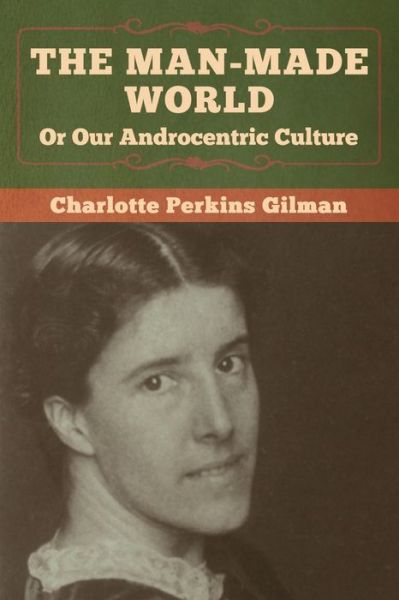
The Man-Made World
Charlotte Perkins Gilman
Let us begin, inoffensively, with sheep. The sheep is a beast with which we are all familiar, being much used in religious imagery; the common stock of painters; a staple article of diet; one of our main sources of clothing; and an everyday symbol of bashfulness and stupidity. In some grazing regions the sheep is an object of terror, destroying grass, bush and forest by omnipresent nibbling; on the great plains, sheep-keeping frequently results in insanity, owing to the loneliness of the shepherd, and the monotonous appearance and behavior of the sheep. By the poet, young sheep are preferred, the lamb gambolling gaily; unless it be in hymns, where "all we like sheep" are repeatedly described, and much stress is laid upon the straying propensities of the animal. To the scientific mind there is special interest in the sequacity of sheep, their habit of following one another with automatic imitation. This instinct, we are told, has been developed by ages of wild crowded racing on narrow ledges, along precipices, chasms, around sudden spurs and corners, only the leader seeing when, where and how to jump. If those behind jumped exactly as he did, they lived. If they stopped to exercise independent judgment, they were pushed off and perished; they and their judgment with them. All these things, and many that are similar, occur to us when we think of sheep. They are also ewes and rams. Yes, truly; but what of it? All that has been said was said of sheep, genus ovis, that bland beast, compound of mutton, wool, and foolishness so widely known. If we think of the sheep-dog (and dog-ess), the shepherd (and shepherd-ess), of the ferocious sheep-eating bird of New Zealand, the Kea (and Kea-ess), all these herd, guard, or kill the sheep, both rams and ewes alike. In regard to mutton, to wool, to general character, we think only of their sheepishness, not at all of their ramishness or eweishness. That which is ovine or bovine, canine, feline or equine, is easily recognized as distinguishing that particular species of animal, and has no relation whatever to the sex thereof. Returning to our muttons, let us consider the ram, and wherein his character differs from the sheep. We find he has a more quarrelsome disposition. He paws the earth and makes a noise. He has a tendency to butt. So has a goat-Mr. Goat. So has Mr. Buffalo, and Mr. Moose, and Mr. Antelope. This tendency to plunge head foremost at an adversary-and to find any other gentleman an adversary on sight-evidently does not pertain to sheep, to genus ovis; but to any male creature with horns.
| Mediji | Grāmatas Paperback Book (Grāmata ar mīksto vāku un līmēto muguru) |
| Izlaists | 2020. gada 3. marts |
| ISBN13 | 9798620970933 |
| Lapas | 188 |
| Izmēri | 152 × 229 × 11 mm · 281 g |
| Valoda | Angļu |
Vairāk no Charlotte Perkins Gilman
Rādīt visu







![Cover for Charlotte Perkins Gilman · Yellow Wall-Paper and Other Writings,The - Torchbearers Series (Paperback Book) [Abridged edition] (2021)](https://imusic.b-cdn.net/images/item/original/258/9780593231258.jpg?charlotte-perkins-gilman-2021-yellow-wall-paper-and-other-writings-the-torchbearers-series-paperback-book&class=scaled&v=1613880459)




Vairāk no šīs sērijas


Skatīt visus Charlotte Perkins Gilman ( piem., Paperback Book , Hardcover Book , Book , CD un Sewn Spine Book )