Pastāsti draugiem par šo preci:
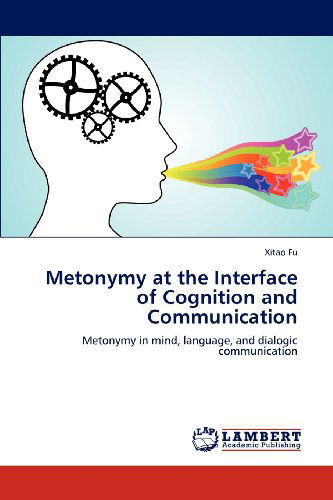
Metonymy at the Interface of Cognition and Communication: Metonymy in Mind, Language, and Dialogic Communication Xitao Fu
 Ziemassvētku dāvanas var atgriezt līdz 31. janvārim

Mūsu klienti saka:


Metonymy at the Interface of Cognition and Communication: Metonymy in Mind, Language, and Dialogic Communication
Xitao Fu
The Cognitive Linguistics treatment of metonymy focuses on how the part concept can evoke the whole, how a salient part of an experiential domain can evoke the domain at large, and how a specific member of a category can evoke the whole category and vice versa. Cognitive Linguists, e.g. Kövecses & Radden (1998), Radden & Kövecses (1999), Ruiz de Mendoza (2000), and Peirsman & Geeraerts (2006), use PART to accommodate the specific member, the part concept, and the salient part, and use WHOLE to accommodate the whole concept, the experiential domain, and the whole category. Therefore Cognitive Linguistics focuses on how the PART evokes the WHOLE and vice versa, i.e. PART-WHOLE RELATING. However, these are descriptions of associations between concepts that are already in place. What Cognitive Linguistics has not investigated in depth is the role metonymy may also play in the formation of those concepts (experiential domains and categories) (i.e. the WHOLE) in the first place. One of the aims of this research is to help fill that niche. It tentatively claims that metonymy is an innate cognitive mechanism involving PART-WHOLE FORMING, PART-WHOLE/PART RELATING processes.
| Mediji | Grāmatas Paperback Book (Grāmata ar mīksto vāku un līmēto muguru) |
| Izlaists | 2012. gada 7. aprīlis |
| ISBN13 | 9783847330226 |
| Izdevēji | LAP LAMBERT Academic Publishing |
| Lapas | 320 |
| Izmēri | 150 × 18 × 226 mm · 471 g |
| Valoda | Angļu |
Skatīt visus Xitao Fu