Pastāsti draugiem par šo preci:
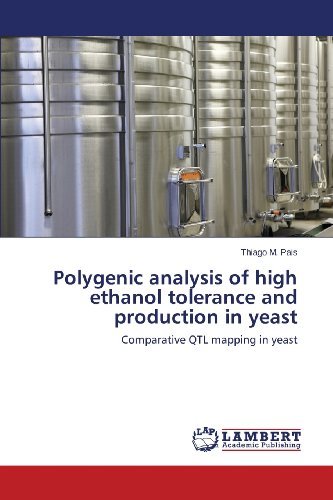
Polygenic Analysis of High Ethanol Tolerance and Production in Yeast: Comparative Qtl Mapping in Yeast Thiago M. Pais
Pasūtīts no attālās noliktavas
 Ziemassvētku dāvanas var atgriezt līdz 31. janvārim

Mūsu klienti saka:


Polygenic Analysis of High Ethanol Tolerance and Production in Yeast: Comparative Qtl Mapping in Yeast
Thiago M. Pais
High ethanol accumulation capacity and high ethanol tolerance are crucial in several industrial applications (Kerr, 2010). Identification of causative genes underlying those polygenic traits have being cumbersome to perform and novel methodologies to facilitate the studies of industrial yeast strains are aspired (Mackay et al., 2009). We have screened 68 different yeast strains in very high gravity fermentations and we have identified a diploid sake strain that produces 18-19% (v/v) ethanol. This strain is able to accumulate nearly 21% (v/v) ethanol when continuous stirred fermentation is performed using YP + 35% glucose. The diploid Sake x BY4742 was sporulated and the meiotic segregants were phenotyped and genotyped on plates containing ethanol and by small scale fermentations. The determination of the genotypes was done by pooled segregant whole-genome sequencing. Applying a Hidden Markov Model approach to map the QTLs we found 8 being linked to maximal ethanol accumulation capacity and 7 QTLs involved in high ethanol tolerance. Reciprocal hemizogosity analysis in two QTLs revealed some causative genes involved in high ethanol accumulation capacity.
| Mediji | Grāmatas Paperback Book (Grāmata ar mīksto vāku un līmēto muguru) |
| Izlaists | 2013. gada 31. oktobris |
| ISBN13 | 9783659475788 |
| Izdevēji | LAP LAMBERT Academic Publishing |
| Lapas | 240 |
| Izmēri | 150 × 14 × 225 mm · 375 g |
| Valoda | Vācu |
Skatīt visus Thiago M. Pais