Pastāsti draugiem par šo preci:
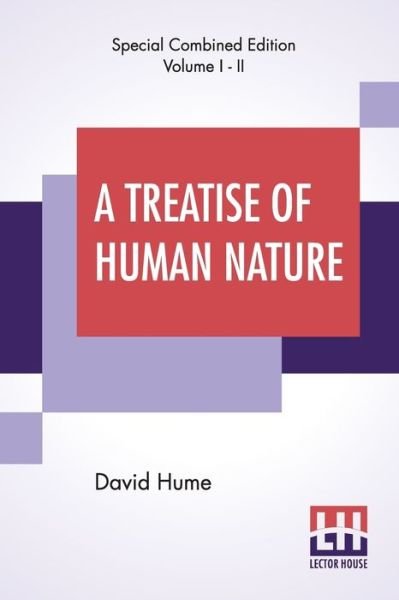
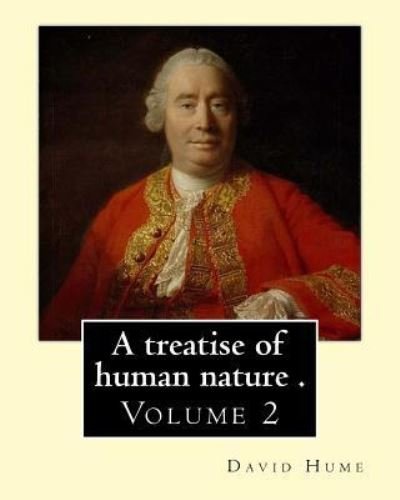
A Treatise of Human Nature David Hume
Pasūtīts no attālās noliktavas
Mūsu klienti saka:


Pieejams arī kā:
- Paperback Book (1985) € 13,99
- Paperback Book (2015) € 15,99
- Paperback Book (2017) € 15,99
- Paperback Book (2018) € 18,49
- Paperback Book (2018) € 18,49
- Paperback Book (2016) € 18,49
- Paperback Book (2023) € 19,49
- Paperback Book (2018) € 19,49
- Paperback Book (2014) € 19,99
- Paperback Book (2017) € 20,99
-
Paperback BookNew edition(2004) € 22,49
- Book (2025) € 23,99
- Paperback Book (2017) € 24,99
- Paperback Book (2019) € 24,99
- Paperback Book (2015) € 24,99
- Paperback Book (2016) € 25,49
- Paperback Book (2012) € 25,49
- Paperback Book (2015) € 26,99
- Paperback Book (2019) € 28,99
- Paperback Book (2016) € 30,49
- Paperback Book (2017) € 31,49
- Paperback Book (2018) € 31,99
- Paperback Book (2016) € 32,99
- Paperback Book (2017) € 32,99
- Paperback Book (2023) € 36,49
A Treatise of Human Nature
David Hume
A Treatise of Human Nature (1738-40) is a book by Scottish philosopher David Hume, considered by many to be Hume's most important work and one of the most influential works in the history of philosophy. The Treatise is a classic statement of philosophical empiricism, skepticism, and naturalism. In the introduction Hume presents the idea of placing all science and philosophy on a novel foundation: namely, an empirical investigation into human nature. Impressed by Isaac Newton's achievements in the physical sciences, Hume sought to introduce the same experimental method of reasoning into the study of human psychology, with the aim of discovering the "extent and force of human understanding". Against the philosophical rationalists, Hume argues that passion rather than reason governs human behaviour. He introduces the famous problem of induction, arguing that inductive reasoning and our beliefs regarding cause and effect cannot be justified by reason; instead, our faith in induction and causation is the result of mental habit and custom. Hume defends a sentimentalist account of morality, arguing that ethics is based on sentiment and passion rather than reason, and famously declaring that "reason is, and ought only to be the slave to the passions". Hume also offers a skeptical theory of personal identity and a compatibilist account of free will.
| Mediji | Grāmatas Paperback Book (Grāmata ar mīksto vāku un līmēto muguru) |
| Izlaists | 2017. gada 1. novembris |
| ISBN13 | 9781978101869 |
| Izdevēji | Createspace Independent Publishing Platf |
| Lapas | 738 |
| Izmēri | 152 × 229 × 37 mm · 970 g |
| Valoda | Angļu |



![Cover for David Hume · My Own Life - Luminary Collection (Paperback Book) [Bilingual edition] (2024)](https://imusic.b-cdn.net/images/item/original/004/9781916658004.jpg?david-hume-2024-my-own-life-luminary-collection-paperback-book&class=scaled&v=1763528421)



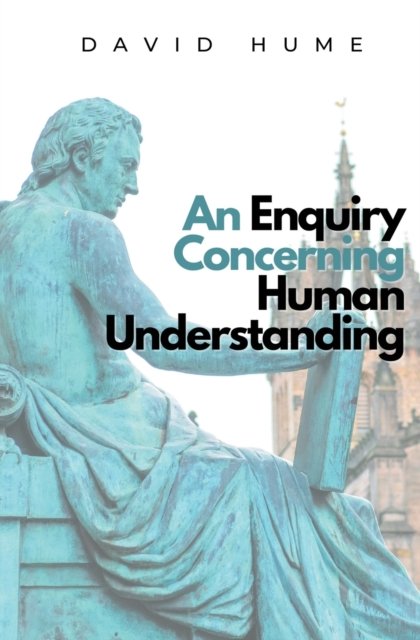
![Cover for David Hume · Histoire D'angleterre. T. 2 (Ed.1839-1840) (French Edition) (Paperback Book) [French edition] (2022)](https://imusic.b-cdn.net/images/item/original/184/9782012666184.jpg?david-hume-2022-histoire-d-angleterre-t-2-ed-1839-1840-french-edition-paperback-book&class=scaled&v=1410165997)
![Cover for David Hume · Discours Politiques De Monsieur Hume Traduits De L'anglois. T. 1 (Ed.1754) (French Edition) (Paperback Book) [French edition] (2022)](https://imusic.b-cdn.net/images/item/original/236/9782012657236.jpg?david-hume-2022-discours-politiques-de-monsieur-hume-traduits-de-l-anglois-t-1-ed-1754-french-edition-paperback-book&class=scaled&v=1409891436)