Pastāsti draugiem par šo preci:
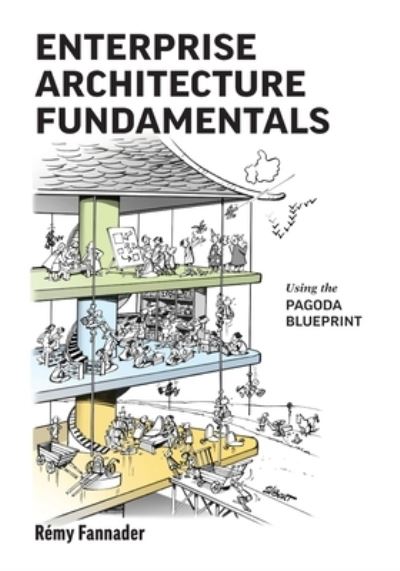
Enterprise Architecture Fundamentals: Using the Pagoda Blueprint Remy Fannader
Pasūtīts no attālās noliktavas
Mūsu klienti saka:


Pieejams arī kā:
Enterprise Architecture Fundamentals: Using the Pagoda Blueprint
Remy Fannader
The book is divided into five parts: parts I and II take a general perspective on enterprise, systems, and frameworks, parts III and IV are focused on technical aspects, and part V takes a prospective view on new challenges and technologies.
Part one outlines the basics of enterprise architecture modeling:
â— Enterprises' maps (or blueprints) and territories (environments, systems, processes)
â— Modeling primer: objects and surrogates
â— Modeling paradigm: environments and systems
Part two explains the core ideas of EA as a discipline:
â— Distinction between business and systems perspectives
â— Benefits of frameworks to map architectures and the management of changes
â— The Pagoda blueprint as a revised understanding of the Zachman framework
Part three considers the all-inclusive representation of data (environments), information (systems), and knowledge (enterprise):
â— Descriptive and prescriptive models
â— Profiles, meta-models, and the benefits of ontologies
â— Ontologies, Knowledge graphs, and the building of actionable maps of environments, organization, and systems.
â— Decision-making processes and the seamless integration of systems and representations.
Part four deals with engineering and the transformation of enterprise architectures:
â— Taxonomy of requirements and the distinction between architecture-oriented and business-driven requirements.
â— Refactoring of requirements along enterprise architecture concerns, with a focus on digital transformation.
â— Role of Use cases for the definition of business objectives, user-driven applications, and systems-oriented functions.
â— Role of Model-based systems engineering (MBSE) at the hub of enterprise architecture transformations, between Agile developments and systems modernization.
Part five considers enterprises as viable organisms and the consequences of new technologies for their resilience and evolution:
â— Enterprises' capacity to change in terms of architecture versatility and plasticity, and the benefits of a revisited Capacity maturity model integration (CMMI)
â— Evolutionary impact of Artificial intelligence and Machine-learning technologies with regard to enterprises' resilience in the face of disruptive changes in environments.
416 pages
| Mediji | Grāmatas Paperback Book (Grāmata ar mīksto vāku un līmēto muguru) |
| Izlaists | 2021. gada 25. maijs |
| ISBN13 | 9781642280616 |
| Izdevēji | Izzard Ink |
| Lapas | 416 |
| Izmēri | 253 × 177 × 26 mm · 716 g |
| Valoda | Angļu |





![Cover for Paul B Skousen · How to Read the Constitution and the Declaration of Independence - Freedom in America (Paperback Book) [2nd edition] (2017)](https://imusic.b-cdn.net/images/item/original/077/9781630721077.jpg?paul-b-skousen-2017-how-to-read-the-constitution-and-the-declaration-of-independence-freedom-in-america-paperback-book&class=scaled&v=1469283844)