
Pastāsti draugiem par šo preci:
Love's Meinie John Ruskin
Mūsu klienti saka:


Pieejams arī kā:
Love's Meinie
John Ruskin
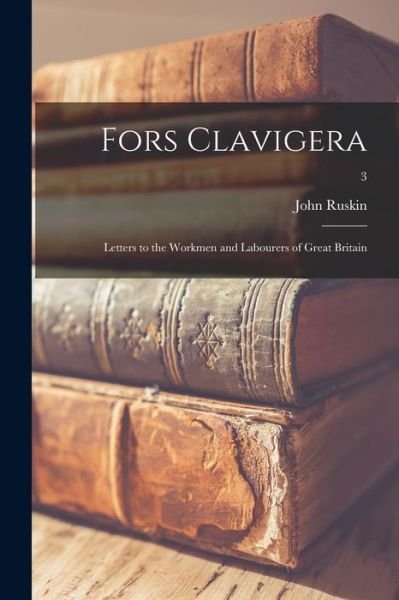
Publisher Marketing: 1. Among the more splendid pictures in the Exhibition of the Old Masters, this year, you cannot but remember the Vandyke portraits of the two sons of the Duke of Lennox. I think you cannot but remember it, because it would be difficult to find, even among the works of Vandyke, a more striking representation of the youth of our English noblesse; nor one in which the painter had more exerted himself, or with better success, in rendering the decorous pride and natural grace of honorable aristocracy. Vandyke is, however, inferior to Titian and Velasquez, in that his effort to show this noblesse of air and persons may always be detected; also the aristocracy of Vandyke's day were already so far fearful of their own position as to feel anxiety that it should be immediately recognized. And the effect of the painter's conscious deference, and of the equally conscious pride of the boys, as they stood to be painted, has been somewhat to shorten the power of the one, and to abase the dignity of the other. And thus, in the midst of my admiration of the youths' beautiful faces, and natural quality of majesty, set off by all splendors of dress and courtesies of art, I could not forbear questioning with myself what the true value was, in the scales of creation, of these fair human beings who set so high a value on themselves; and, -as if the only answer, -the words kept repeating themselves in my ear, "Ye are of more value than many sparrows." Contributor Bio: Ruskin, John John Ruskin ( 1819 - 1900) was the leading English art critic of the Victorian era, also an art patron, draughtsman, watercolourist, a prominent social thinker and philanthropist. He wrote on subjects ranging from geology to architecture, myth to ornithology, literature to education, and botany to political economy. His writing styles and literary forms were equally varied. Ruskin penned essays and treatises, poetry and lectures, travel guides and manuals, letters and even a fairy tale. The elaborate style that characterised his earliest writing on art was later superseded by a preference for plainer language designed to communicate his ideas more effectively. In all of his writing, he emphasised the connections between nature, art and society. He also made detailed sketches and paintings of rocks, plants, birds, landscapes, and architectural structures and ornamentation. He was hugely influential in the latter half of the 19th century, and up to the First World War. After a period of relative decline, his reputation has steadily improved since the 1960s with the publication of numerous academic studies of his work. Today, his ideas and concerns are widely recognised as having anticipated interest in environmentalism, sustainability and craft.
| Mediji | Grāmatas Paperback Book (Grāmata ar mīksto vāku un līmēto muguru) |
| Izlaists | 2014. gada 12. maijs |
| ISBN13 | 9781499331769 |
| Izdevēji | Createspace |
| Lapas | 88 |
| Izmēri | 152 × 229 × 5 mm · 127 g |
Vairāk no John Ruskin
Rādīt visu





![Cover for John Ruskin · The Crown of Wild Olive [microform]: Four Lectures on Industry and War (Paperback Book) (2021)](https://imusic.b-cdn.net/images/item/original/363/9781015009363.jpg?john-ruskin-2021-the-crown-of-wild-olive-microform-four-lectures-on-industry-and-war-paperback-book&class=scaled&v=1642670107)
Vairāk no šīs sērijas


Skatīt visus John Ruskin ( piem., Paperback Book , Hardcover Book , Book , Book pack un CD-ROM )