Pastāsti draugiem par šo preci:
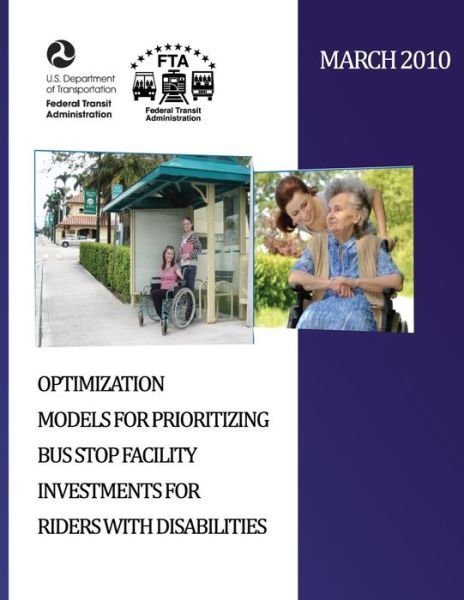
Optimization Models for Prioritizing Bus Stop Facility Investments for Riders with Disabilities U.s. Department of Transportation
Pasūtīts no attālās noliktavas
 Ziemassvētku dāvanas var atgriezt līdz 31. janvārim

Mūsu klienti saka:


Optimization Models for Prioritizing Bus Stop Facility Investments for Riders with Disabilities
U.s. Department of Transportation
The Americans with Disabilities Act (ADA) of 1990 prescribes the minimum requirements for bus stop accessibility by riders with disabilities. Due to limited budgets, transit agencies can only select a limited number of bus stop locations for ADA improvements annually. These locations should preferably be selected such that they maximize the overall benefits to patrons with disabilities. In addition, transit agencies may choose to implement the ?universal design? paradigm, which involves higher design standards than current ADA requirements and can provide amenities that are useful for all riders, like shelters and lighting. Many factors can affect the decision to improve a bus stop, including rider-based aspects like the number of riders with disabilities, total ridership, customer complaints, accidents, deployment costs, as well as spatial aspects like the location of employment centers, schools, shopping areas, and so on. These interlacing factors make it difficult to identify optimum improvement locations without the aid of an optimization model. This report proposes two optimization models to help identify a priority list of bus stops for accessibility improvements. The first is a binary integer programming model designed to identify bus stops that need improvements to meet the minimum ADA requirements. The second involves a multi-objective nonlinear mixed integer programming model that attempts to achieve an optimal compromise among the two accessibility design standards. Based on a case study using data from Broward County Transit (BCT) in Florida, the models were found to produce a list of bus stops that were determined to be highly logical upon close examination. Compared to traditional approaches using staff experience, requests from elected officials, customer complaints, etc., these optimization models offer a more objective and efficient platform on which to make bus stop improvement suggestions.
| Mediji | Grāmatas Paperback Book (Grāmata ar mīksto vāku un līmēto muguru) |
| Izlaists | 2013. gada 15. decembris |
| ISBN13 | 9781494427283 |
| Izdevēji | CreateSpace Independent Publishing Platf |
| Lapas | 120 |
| Izmēri | 216 × 280 × 7 mm · 299 g |
| Valoda | Angļu |