Pastāsti draugiem par šo preci:
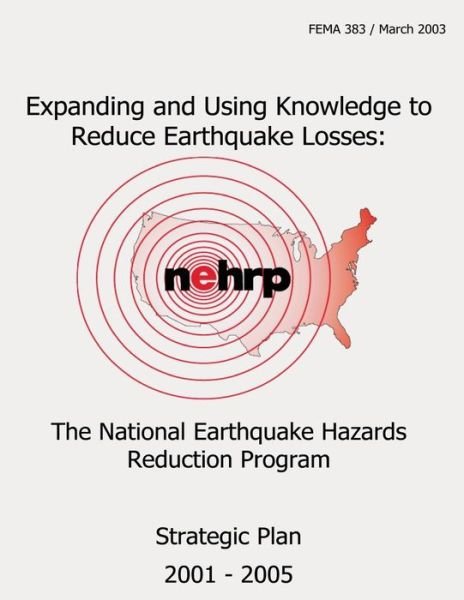
Expanding and Using Knowledge to Reduce Earthquake Losses: the National Earthquake Hazards Reduction Program Strategic Plan 2001- 2005 (Fema 383) Federal Emergency Management Agency
Pasūtīts no attālās noliktavas
 Ziemassvētku dāvanas var atgriezt līdz 31. janvārim

Mūsu klienti saka:


Expanding and Using Knowledge to Reduce Earthquake Losses: the National Earthquake Hazards Reduction Program Strategic Plan 2001- 2005 (Fema 383)
Federal Emergency Management Agency
Earthquakes represent an enormous threat to the Nation. Although damaging earthquakes occur infrequently, their consequences can be staggering. As recent earthquakes around the world have demonstrated, high population densities and development pressures, particularly in urban areas, are increasingly vulnerable. Unacceptably high loss of life and enormous economic consequences are associated with recent global earthquakes, and it is only a matter of time before the United States faces a similar experience. Earthquakes cannot be prevented, but their impacts can be managed to a large degree so that loss to life and property can be reduced. To this end, the National Earthquake Hazards Reduction Program (NEHRP) seeks to mitigate earthquake losses in the U. S. through both basic and directed research and implementation activities in the fields of earthquake science and engineering. This program is authorized and funded by Congress and is managed as a collaborative effort among the Federal Emergency Management Agency (FEMA), the National Institute of Standards and Technology (NIST), the National Science Foundation (NSF), and the United States Geological Survey (USGS). These four Federal organizations work in close coordination to improve the Nation?s understanding of earthquake hazards and to mitigate their effects. The missions of the four agencies are complementary: FEMA, a component of the Department of Homeland Security, works with states, local governments, and the public to develop tools and improve policies and practices that reduce earthquake losses; NIST enables technology innovation in earthquake engineering by working with industry to remove technical barriers, evaluate advanced technologies, and develop the measurement and prediction tools underpinning performance standards for buildings and lifelines; NSF strives to advance fundamental knowledge in earthquake engineering, earth science processes, and societal preparedness and response to earthquakes; and USGS monitors earthquakes, assesses seismic hazard for the Nation, and researches the basic earth science processes controlling earthquake occurrence and effects. Mindful of the increasing threat posed by earthquakes, NEHRP initiated a review of the scientific goals and strategies of the Program and a discussion of the opportunities and priorities for the five-year interval 2001-2005. This review and discussion culminated in the new strategic plan presented here. Shaping the plan are four goals that represent the continuum of activities in the Program, ranging from research and development to application and implementation. These four goals are as follows: A. Develop effective practices and policies for earthquake loss-reduction and accelerate their implementation. B. Improve techniques to reduce seismic vulnerability of facilities and systems. C. Improve seismic hazard identification and risk assessment methods and their use. D. Improve the understanding of earthquakes and their effects.
| Mediji | Grāmatas Paperback Book (Grāmata ar mīksto vāku un līmēto muguru) |
| Izlaists | 2013. gada 13. aprīlis |
| ISBN13 | 9781484111413 |
| Izdevēji | CreateSpace Independent Publishing Platf |
| Lapas | 76 |
| Izmēri | 216 × 280 × 4 mm · 204 g |
| Valoda | Angļu |
![Cover for Federal Emergency Management Agency · Recommended Residential Construction for Coastal Areas - Building on Strong and Safe Foundations (Paperback Book) [Fema P-550, Second, 2 edition] (2013)](https://imusic.b-cdn.net/images/item/original/657/9781484818657.jpg?federal-emergency-management-agency-2013-recommended-residential-construction-for-coastal-areas-building-on-strong-and-safe-foundations-paperback-book&class=scaled&v=1412486600)