Pastāsti draugiem par šo preci:
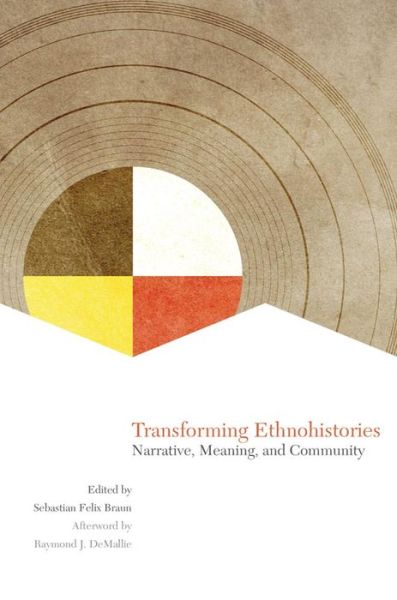
Transforming Ethnohistories: Narrative, Meaning, and Community Sebastian F Braun
Pasūtīts no attālās noliktavas
 Ziemassvētku dāvanas var atgriezt līdz 31. janvārim

Mūsu klienti saka:


Transforming Ethnohistories: Narrative, Meaning, and Community
Sebastian F Braun
Brief Description: " Anthropologists need history to understand how the past has shaped the present. Historians need anthropology to help them interpret the past. Where anthropologists' and historians' needs intersect is ethnohistory. The contributors to this volume have been inspired in large part by the teaching and writing of distinguished ethnohistorian Raymond J. DeMallie, whose exemplary combination of ethnographic and archival research demonstrates the ways anthropology and history can work together to create an understanding of the past and the present. Transforming Ethnohistories comprises ten new avenues of ethnohistorical research ranging in topic from fiddling performances to environmental disturbance and spanning places from North Carolina to the Yukon. The authors seek to understand communities by finding and interpreting their stories in a variety of different texts, some of which lie outside academic understanding and research methodology. It is exactly those stories, conventionally labeled "myths" or "oral tradition," that ethnohistorians demand we pay attention to. Although historians cannot see or talk to their informants as anthropologists do, both anthropologists and historians can listen to oral histories and written documents for the essential stories they contain. The essays assembled here use DeMallie's approach to contribute to the history and anthropology of Native North America and address issues of literary criticism and contexts, sociolinguistics, performance theory, identity and historical change, historical and anthropological methods and theory, and the interpretation of histories, cultures, and stories. Debates over the legitimacy of ethnohistory as a specialization have led some scholars to declare its decline. This volume shows ethnohistory to be alive and well and continuing to attract young scholars"--Marc Notes: Includes bibliographical references and index.; Anthropologists need history to understand how the past has shaped the present. Historians need anthropology to help them interpret the past. Where anthropologists' and historians' needs intersect is ethnohistory. The contributors to this volume have been inspired in large part by the teaching and writing of distinguished ethnohistorian Raymond J. DeMallie, whose exemplary combination of ethnographic and archival research demonstrates the ways anthropology and history can work together to create an understanding of the past and the present. Transforming Ethnohistories comprises ten new avenues of ethnohistorical research ranging in topic from fiddling performances to environmental disturbance and spanning places from North Carolina to the Yukon. The authors seek to understand communities by finding and interpreting their stories in a variety of different texts, some of which lie outside academic understanding and research methodology. It is exactly those stories, conventionally labeled myths or oral tradition, that ethnohistorians demand we pay attention to. Although historians cannot see or talk to their informants as anthropologists do, both anthropologists and historians can listen to oral histories and written documents for the essential stories they contain. The essays assembled here use DeMallie's approach to contribute to the history and anthropology of Native North America and address issues of literary criticism and contexts, sociolinguistics, performance theory, identity and historical change, historical and anthropological methods and theory, and the interpretation of histories, cultures, and stories. Debates over the legitimacy of ethnohistory as a specialization have led some scholars to declare its decline. This volume shows ethnohistory to be alive and well and continuing to attract young scholars--; Provided by publisher. Publisher Marketing: Anthropologists need history to understand how the past has shaped the present. Historians need anthropology to help them interpret the past. Where anthropologists' and historians' needs intersect is ethnohistory. The contributors to this volume have been inspired in large part by the teaching and writing of distinguished ethnohistorian Raymond J. DeMallie, whose exemplary combination of ethnographic and archival research demonstrates the ways anthropology and history can work together to create an understanding of the past and the present. "Transforming Ethnohistories "comprises ten new avenues of ethnohistorical research ranging in topic from fiddling performances to environmental disturbance and spanning places from North Carolina to the Yukon. The authors seek to understand communities by finding and interpreting their stories in a variety of different texts, some of which lie outside academic understanding and research methodology. It is exactly those stories, conventionally labeled "myths" or "oral tradition," that ethnohistorians demand we pay attention to. Although historians cannot see or talk to their informants as anthropologists do, both anthropologists and historians can "listen" to oral histories and written documents for the essential stories they contain. The essays assembled here use DeMallie's approach to contribute to the history and anthropology of Native North America and address issues of literary criticism and contexts, sociolinguistics, performance theory, identity and historical change, historical and anthropological methods and theory, and the interpretation of histories, cultures, and stories. Debates over the legitimacy of ethnohistory as a specialization have led some scholars to declare its decline. This volume shows ethnohistory to be alive and well and continuing to attract young scholars.
Contributor Bio: DeMallie, Raymond J Raymond J. DeMallie is Chancellor's Professor of Anthropology and American Indian Studies at Indiana University.
316 pages, 6 black & white illustrations, 3 tables
| Mediji | Grāmatas Paperback Book (Grāmata ar mīksto vāku un līmēto muguru) |
| Izlaists | 2013. gada 6. septembris |
| ISBN13 | 9780806143941 |
| Izdevēji | University of Oklahoma Press |
| Žanrs | Ethnic Orientation > Native American - Aspects (Academic) > Anthropological |
| Lapas | 316 |
| Izmēri | 156 × 235 × 20 mm · 540 g |
| Valoda | Angļu |
| Redaktors | Braun, Sebastian Felix |




