
Pastāsti draugiem par šo preci:
Beyond Good and Evil Friedrich Nietzsche
Mūsu klienti saka:


Pieejams arī kā:
- Paperback Book (2003) € 12,49
- Paperback Book (2025) € 14,49
- Paperback Book (2017) € 14,99
- Paperback Book (2010) € 15,49
- Hardcover Book (2023) € 16,49
- Paperback Book (2018) € 17,49
- Book (2025) € 22,49
- Book (2026) € 22,49
- Paperback Book (2023) € 22,99
- Paperback Book (2021) € 22,99
- Paperback Book (2008) € 23,49
- Hardcover Book (1901) € 24,99
- Paperback Book (2022) € 25,99
- Hardcover Book (2018) € 28,99
- Paperback Book (2009) € 28,99
- Hardcover Book (2018) € 32,49
-
Hardcover BookRoyal Collector's edition(2021) € 45,49
Beyond Good and Evil
Friedrich Nietzsche
In Beyond Good and Evil, Nietzsche accuses the philosophers of the past of being uncritical and blindly accepting dogmatic premises in their consideration of morality. Specifically, he accuses them of founding great metaphysical systems on the faith that the good man is the opposite of the evil man, rather than a different expression of the same basic impulses that find a more direct expression in the evil man. The work moves towards the realm "beyond good and evil" in the sense of leaving behind traditional morality that Nietzsche subjects to destructive criticism in favor of what he considers an affirmative approach that fearlessly confronts the perspectival nature of knowledge. and the dangerous condition. of the modern individual. Of Nietzsche's four "late period" writings, Beyond Good and Evil most closely resembles the aphoristic style of his middle period. In it he exposes the deficiencies of the habitually called "philosophers" and identifies the qualities of the "new philosophers": imagination, self-affirmation, danger, originality and the "creation of values". He then questions some of the key presuppositions of the ancient philosophical tradition such as "self-consciousness", "knowledge", "truth" and "free will", and explains them as inventions of moral conscience. Instead,
| Mediji | Grāmatas Paperback Book (Grāmata ar mīksto vāku un līmēto muguru) |
| Izlaists | 2021. gada 19. marts |
| ISBN13 | 9798724945578 |
| Izdevēji | Independently Published |
| Lapas | 158 |
| Izmēri | 152 × 229 × 9 mm · 217 g |
| Valoda | Angļu |

![Cover for Friedrich Nietzsche · Thus Spoke Zarathustra: A Book for Everyone and Nobody - Oxford World's Classics (Paperback Book) [2 Revised edition] (2026)](https://imusic.b-cdn.net/images/item/original/707/9780198992707.jpg?friedrich-nietzsche-2026-thus-spoke-zarathustra-a-book-for-everyone-and-nobody-oxford-world-s-classics-paperback-book&class=scaled&v=1769434522)
![Cover for Friedrich Nietzsche · The Birth of Tragedy / Unpublished Basel Writings (Winter 1869/70–Fall 1873): Volume 1 - The Complete Works of Friedrich Nietzsche (Paperback Book) [New edition] (2026)](https://imusic.b-cdn.net/images/item/original/370/9780804750370.jpg?friedrich-nietzsche-2026-the-birth-of-tragedy-unpublished-basel-writings-winter-1869-70-fall-1873-volume-1-the-complete-works-of-friedrich-nietzsche-paperback-book&class=scaled&v=1757936967)


![Cover for Friedrich Nietzsche · Unpublished Fragments (Summer 1886–Fall 1887): Volume 17 - The Complete Works of Friedrich Nietzsche (Paperback Book) [New edition] (2025)](https://imusic.b-cdn.net/images/item/original/672/9781503640672.jpg?friedrich-nietzsche-2025-unpublished-fragments-summer-1886-fall-1887-volume-17-the-complete-works-of-friedrich-nietzsche-paperback-book&class=scaled&v=1725920001)


![Cover for Friedrich Nietzsche · Unpublished Fragments from the Period of Dawn (Winter 1879/80–Spring 1881): Volume 13 - The Complete Works of Friedrich Nietzsche (Paperback Book) [New edition] (2023)](https://imusic.b-cdn.net/images/item/original/989/9781503636989.jpg?friedrich-nietzsche-2023-unpublished-fragments-from-the-period-of-dawn-winter-1879-80-spring-1881-volume-13-the-complete-works-of-friedrich-nietzsche-paperback-book&class=scaled&v=1691643169)




![Cover for Friedrich Nietzsche · The Joyful Science / Idylls from Messina / Unpublished Fragments from the Period of the Joyful Science (Spring 1881–Summer 1882): Volume 6 - The Complete Works of Friedrich Nietzsche (Paperback Book) [New edition] (2023)](https://imusic.b-cdn.net/images/item/original/325/9781503632325.jpg?friedrich-nietzsche-2023-the-joyful-science-idylls-from-messina-unpublished-fragments-from-the-period-of-the-joyful-science-spring-1881-summer-1882-volume-6-the-complete-works-of-friedrich-nietzsche-paperback-book&class=scaled&v=1662659855)






![Cover for Friedrich Nietzsche · Beyond Good and Evil (Royal Collector's Edition) (Case Laminate Hardcover with Jacket) (Hardcover Book) [Royal Collector's edition] (2021)](https://imusic.b-cdn.net/images/item/original/472/9781774761472.jpg?friedrich-nietzsche-2021-beyond-good-and-evil-royal-collector-s-edition-case-laminate-hardcover-with-jacket-hardcover-book&class=scaled&v=1642408116)





![Cover for Friedrich Nietzsche · Beyond Good and Evil / on the Genealogy of Morality: Volume 8 - The Complete Works of Friedrich Nietzsche (Paperback Book) [New edition] (2014)](https://imusic.b-cdn.net/images/item/original/984/9780804788984.jpg?friedrich-nietzsche-2014-beyond-good-and-evil-on-the-genealogy-of-morality-volume-8-the-complete-works-of-friedrich-nietzsche-paperback-book&class=scaled&v=1401888891)

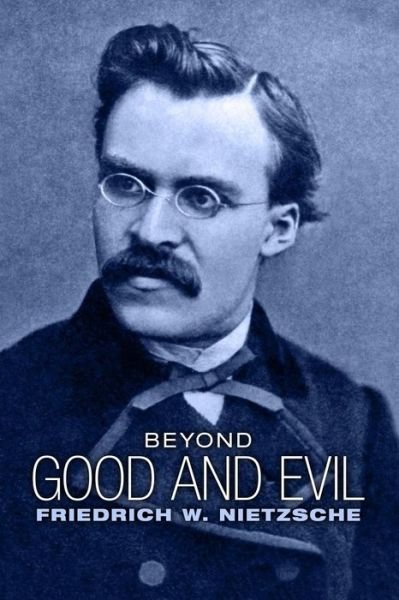

![Cover for Friedrich Nietzsche · Beyond Good and Evil: Prelude to a Philosophy of the Future - Dover Thrift Editions (Paperback Book) [New edition] (2000)](https://imusic.b-cdn.net/images/item/original/689/9780486298689.jpg?friedrich-nietzsche-2000-beyond-good-and-evil-prelude-to-a-philosophy-of-the-future-dover-thrift-editions-paperback-book&class=scaled&v=1399559811)