Pastāsti draugiem par šo preci:
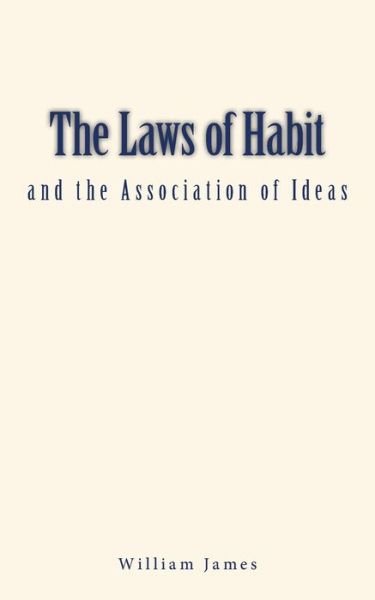
The Laws of Habit William James
Mūsu klienti saka:


The Laws of Habit
William James
Do you know how we connect our ideas and create complex mental concepts?The laws of association of habits have been studied since Aristotle. According to him, we create more complex concepts by connecting simpler ones based on three things:
SimilaritySpatio-temporal contiguityOppositionIn the 18th century, in the times of the Scottish Enlightenment, David Hume challenged Aristotle's scheme. For Hume, "similarity" and "opposition" can be considered as the same thing, and there is one more type of associating ideas. Hume's typology was:
Similarity (or Resemblance) ContiguityCausationHume concluded that only the last one (causation) can give us newinformation orconcepts. However, Hume's explanation was not based on the sciences of the neurons.
A century later, this time in the US, William James (who was also a medical doctor) took his chance of explaining the laws of habits based on the human nervous system and its capacities.
In this book, you will find James' highly educated answers on the following questions:
What isconcept?What ishabit?How do we construct more complex concepts and create more complex habits?How are senses connected to the habits?How do we know what isgood for us?How do we reason?How do we solve problems?How do we acquire new knowledge and novel concepts?How do we learn?Here are some passages from the book:
"The moment one tries to define what habit is, one is led to the fundamental properties of matter. The laws of Nature are nothing but the immutable habits which the different elementary sorts of matter follow in their actions and reactions upon each other. In the organic world, however, the habits are more variable than this."
"The mechanical problem, then, is to explain the formation de novo of a simple reflex arc in a pre-existing nervous system."
"The psychical principles of association, indeed, and the physiological principles of nutrition, simply express-the former in terms of mind, the latter in terms of brain-the universally admitted fact that any sequence of mental action which has been frequently repeated tends to perpetuate itself; so that we find ourselves automatically prompted to think, feel, or do what we have been before accustomed to think, feel, or do, under like circumstances, without any consciously formed purpose, or anticipation of results. For there is no reason to regard the cerebrum as an exception to the general principle that, while each part of the organism tends to form itself in accordance with the mode in which it is habitually exercised, this tendency will be especially strong in the nervous apparatus, in virtue of that incessant regeneration which is the very condition of its functional activity."
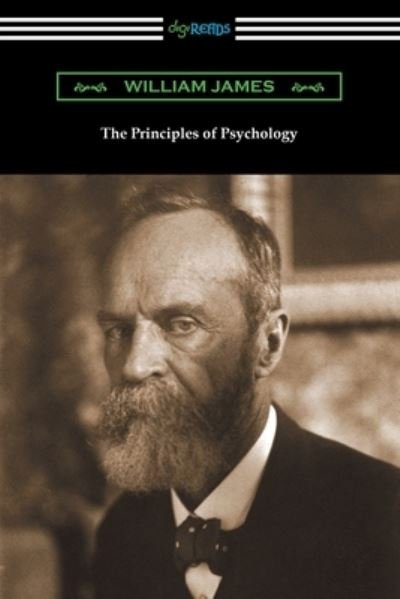
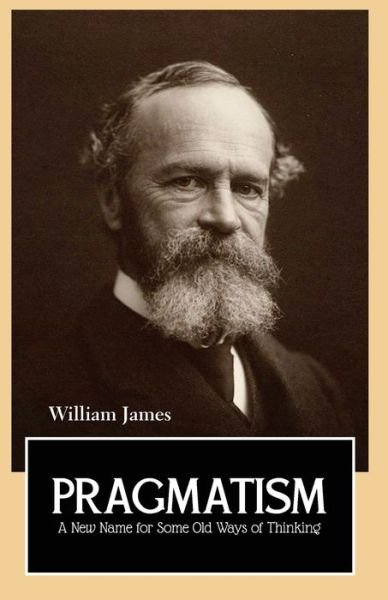
"If the period between twenty and thirty is the critical one in the formation of intellectual and professional habits, the period below twenty is more important still for the fixing of personal habits, properly so-called, such as vocalization and pronunciation, gesture, motion, and address." Who is William James?William James (1842 - 1910) was an American philosopher and psychologist, and the first educator to offer a psychology course in the United States. James is considered to be a leading thinker of
| Mediji | Grāmatas Paperback Book (Grāmata ar mīksto vāku un līmēto muguru) |
| Izlaists | 2020. gada 21. oktobris |
| ISBN13 | 9798551012016 |
| Lapas | 36 |
| Izmēri | 127 × 203 × 2 mm · 49 g |
| Valoda | Angļu |



![Cover for William James · The Meaning of Truth (Concise Edition) - Foundations (Paperback Book) [Concise edition] (2024)](https://imusic.b-cdn.net/images/item/original/945/9781804177945.jpg?william-james-2024-the-meaning-of-truth-concise-edition-foundations-paperback-book&class=scaled&v=1695124753)