Pastāsti draugiem par šo preci:
Gorgias Plato
Pasūtīts no attālās noliktavas
 Ziemassvētku dāvanas var atgriezt līdz 31. janvārim

Mūsu klienti saka:


Pieejams arī kā:
- Paperback Book (2004) € 11,99
- Paperback Book (2018) € 13,99
- Paperback Book (2018) € 13,99
- Paperback Book (2011) € 14,99
- Paperback Book (2015) € 14,99
- Paperback Book (2016) € 15,99
- Paperback Book (2019) € 15,99
- Paperback Book (2015) € 16,49
- Paperback Book (2013) € 17,49
- Paperback Book (2016) € 17,49
- Paperback Book (2008) € 17,49
- Paperback Book (2010) € 17,49
- Paperback Book (2013) € 20,49
- Paperback Book (2017) € 22,49
- Book (2025) € 22,49
- Paperback Book (2019) € 22,99
- Paperback Book (2008) € 24,49
- Paperback Book (2022) € 24,49
- Paperback Book (2021) € 24,49
- Paperback Book (2012) € 25,49
- Book (2024) € 25,49
- Book (2022) € 25,99
- Paperback Book (2008) € 25,99
- Book (2026) € 27,49
- Paperback Book (2026) € 27,49
Gorgias
Plato
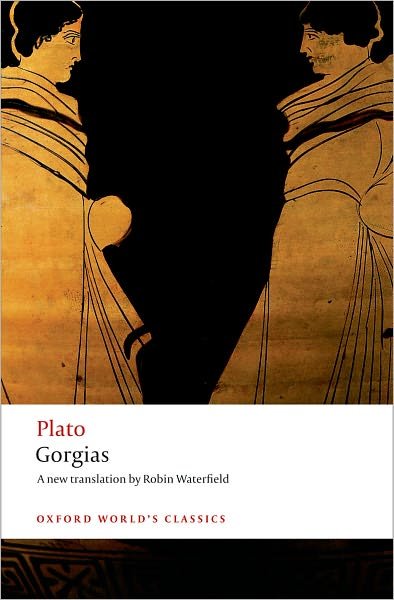
Plato, an early Greek philosopher, composed "Gorgias" as a Socratic conversation about 380 BC. It is named after the dialogue's main character, the famous Greek sophist Gorgias. The discussion examines a number of philosophical and rhetorical subjects, such as the essence of rhetoric, the search of knowledge, and the effectiveness of persuasion. The dialogue starts with Socrates conversing with Gorgias, who is renowned for his rhetorical prowess. Gorgias is questioned by Socrates over the moral implications of eloquence and its genuine nature. Through their conversation, Socrates refutes Gorgias' beliefs and makes the case that genuine wisdom and virtue are more important than mere persuasion. The conversation then moves on to further participants, including Callicles, a well-known Athenian politician, and Polus, another young sophist. The essence of justice, morality, and the use of power are further explored in these conversations. The "Gorgias" by Plato addresses important issues on the morality and function of persuasion. It criticizes the dishonest use of language for self-advancement and promotes the quest for truth and the development of virtue. The fact that "Gorgias" is still a well-known work in the Platonic corpus shows how engaged Plato is with sophistry and how crucial ethical reasoning is to the search for the truth.
| Mediji | Grāmatas Paperback Book (Grāmata ar mīksto vāku un līmēto muguru) |
| Izlaists | 2023 |
| ISBN13 | 9789358719833 |
| Izdevēji | Double 9 Books |
| Lapas | 139 |
| Izmēri | 140 × 216 × 10 mm · 162 g |
| Valoda | Angļu |




![Cover for Plato · The Republic [illustrated Edition] (Paperback Book) (2024)](https://imusic.b-cdn.net/images/item/original/405/9781434465405.jpg?plato-2024-the-republic-illustrated-edition-paperback-book&class=scaled&v=1497212240)


![Cover for Plato · The Republic: The Essential Philosophical Dialogue (Concise Edition) - Foundations (Paperback Book) [Concise edition] (2024)](https://imusic.b-cdn.net/images/item/original/938/9781804177938.jpg?plato-2024-the-republic-the-essential-philosophical-dialogue-concise-edition-foundations-paperback-book&class=scaled&v=1695111621)




![Cover for Plato · Gorgias (Royal Collector's Edition) (Case Laminate Hardcover with Jacket) (Hardcover Book) [Royal Collector's edition] (2021)](https://imusic.b-cdn.net/images/item/original/654/9781774765654.jpg?plato-2021-gorgias-royal-collector-s-edition-case-laminate-hardcover-with-jacket-hardcover-book&class=scaled&v=1638603818)

![Cover for Plato · Gorgias - Agora Editions (Paperback Book) [New edition] (1998)](https://imusic.b-cdn.net/images/item/original/275/9780801485275.jpg?plato-1998-gorgias-agora-editions-paperback-book&class=scaled&v=1441213401)



![Cover for Plato · Gorgias: A revised text, with Introduction and Commentary - Clarendon Paperbacks (Paperback Book) [2 Rev edition] (1990)](https://imusic.b-cdn.net/images/item/original/953/9780198144953.jpg?plato-1990-gorgias-a-revised-text-with-introduction-and-commentary-clarendon-paperbacks-paperback-book&class=scaled&v=1462123655)