Pastāsti draugiem par šo preci:
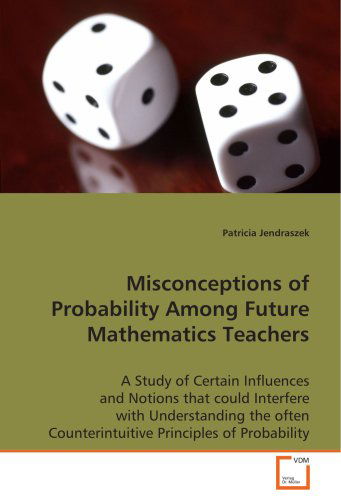
Misconceptions of Probability Among Futuremathematics Teachers: a Study of Certain Influences and Notions That Couldinterfere with Understanding the Often Counterintuitive Principlesof Probability Patricia Jendraszek
Pasūtīts no attālās noliktavas
 Ziemassvētku dāvanas var atgriezt līdz 31. janvārim

Mūsu klienti saka:


Misconceptions of Probability Among Futuremathematics Teachers: a Study of Certain Influences and Notions That Couldinterfere with Understanding the Often Counterintuitive Principlesof Probability
Patricia Jendraszek
Consider a coin toss, many would guess that theprobability of 2 or more heads in 3 tosses is the same as the probabilityof 200 or more heads in 300 tosses, the proportion of headsbeing the same. Actually, the probability of 2 or more heads in 3tosses is 0.5 and the probability of 200 or more heads in 300 tosses isonly about 0.000000004. Many probability concepts are similarly counterintuitive. This work examines the historicalevolution of the concept of probability and considers certaininfluences and notions that could interfere with understanding it. It alsotests the concept of probability and the incidence of misconceptions ofprobability among students (n=66) at a graduate school ofeducation in order to assess teachers' understanding of the subject. This understanding is clearly necessary to effectivelyteach probability. Study participants demonstrated basic knowledge of probability but were less successful at morecomplicated problems and exhibited many misconceptions. Participants whohad reported higher levels of formal probability preparationtended to perform better, suggesting that more education may help. Gender differences were also observed.
| Mediji | Grāmatas Paperback Book (Grāmata ar mīksto vāku un līmēto muguru) |
| Izlaists | 2008. gada 30. oktobris |
| ISBN13 | 9783639085488 |
| Izdevēji | VDM Verlag |
| Lapas | 280 |
| Izmēri | 154 × 229 × 16 mm · 376 g |
| Valoda | Angļu Vācu |