
Pastāsti draugiem par šo preci:
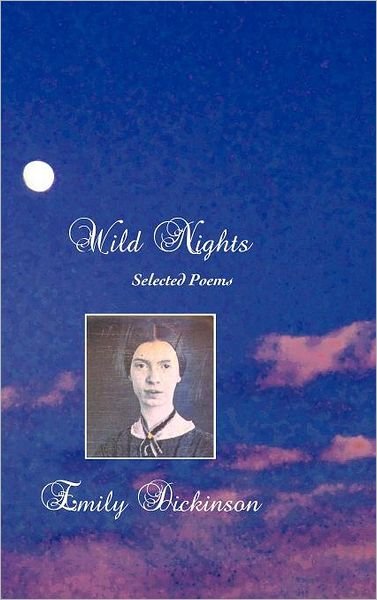
Wild Nights Emily Dickinson
Mūsu klienti saka:


Pieejams arī kā:
Wild Nights
Emily Dickinson
EMILY DICKINSON: WILD NIGHTS: SELECTED POEMS selected and introduced by Miriam Chalk One of the most extraordinary poets of any era, American poetess Emily Dickinson wrote a huge amount of poetry (nearly 1800 poems). This book ranges from her early work to the late pieces, and features many of Dickinson's most famous pieces. This new edition includes many new poems. Emily Dickinson's poetry is among the strangest, the most compelling and the most direct in world literature. There is nothing else quite like it. She writes in short lyrics, often only eight lines long, often in regular quatrains, but often in irregular lines consisting of two half-lines joined in the middle by a dash (such as: ''Tis Honour - though I die' in "Had I presumed to hope"). Her subjects appear to be the traditional ones of poetry, blocked in with capital letters: God, Love, Hope, Time, Nature, the Sea, the Sun, the World, Childhood, the Past, and so on. Yet what exactly is Dickinson discussing? Who is the 'I', the 'Thee', the 'we' and the 'you' in her poetry? This is where things become much more ambiguous. Dickinson is very clear at times in her poetry, until one considers deeper exactly what she is saying - but this ambiguity is one of the hallmarks and the delights of her art. As an example of Emily Dickinson's idiosyncratic use of punctuation, particularly the dash, this is from "Behind me - dips Eternity": Behind me - dips Eternity - Before Me - Immortality - Myself - the Term Death but the Drift of Eastern Gray, Dissolving into Dawn away, Before the West - No other poet has made such a distinctive use of the dash which does for full stops, commas, colons and semi-colons. The dash serves to break up the ?ow of Dickinson's verse, but it also connects together a series of thoughts. The only other poet I can think of who uses the dash so profusely is Arthur Rimbaud. As with Rimbaud, Dickinson's use of the dash hints at a rush of information, one phrase piling on top of the other. It is a rush of data which's sometimes found in mystical writings. As with Rimbaud, Dickinson's poetry sometimes looks as if she were very excited, as if the experience in the poetry is threatening to erupt out of the form of the verse. Some poets went for using punctuation at all (or very little), which we find in poets such as Ezra Pound or Allen Ginsberg. With Dickinson, though, there is no (or not much) difficulty in how she is trying to speak. There is ambiguity, but it is not the same as the ambiguities in Joyce or Stein. Dickinson also employs a profusion of exclamation marks - as many (if not more) than the equally exuberant Romantic poets. There is a state that Dickinson's poetic persona gets into, that requires the use of exclamation marks to communicate her exultation. Includes an introduction, bibliography, notes. 124 pages. Also available in hardcover. www.crmoon.com
| Mediji | Grāmatas Paperback Book (Grāmata ar mīksto vāku un līmēto muguru) |
| Izlaists | 2017. gada 11. novembris |
| ISBN13 | 9781861717054 |
| Izdevēji | Crescent Moon Publishing |
| Lapas | 124 |
| Izmēri | 152 × 229 × 7 mm · 176 g |
| Valoda | Angļu |
Vairāk no Emily Dickinson
















![Cover for Emily Dickinson · Complete Poems (Paperback Book) [Main edition] (2016)](https://imusic.b-cdn.net/images/item/original/173/9780571336173.jpg?emily-dickinson-2016-complete-poems-paperback-book&class=scaled&v=1491038652)

![Cover for Emily Dickinson · Selected Poems of Emily Dickinson (Paperback Book) [Bonded Leather edition] (2016)](https://imusic.b-cdn.net/images/item/original/563/9781435162563.jpg?emily-dickinson-2016-selected-poems-of-emily-dickinson-paperback-book&class=scaled&v=1467635497)






Vairāk no šīs sērijas
![Cover for Emily Dickinson · Wild Nights: Selected Poems (Paperback Book) [3rd Revised edition] (2012)](https://imusic.b-cdn.net/images/item/original/636/9781861713636.jpg?emily-dickinson-2012-wild-nights-selected-poems-paperback-book&class=scaled&v=1409566385)
Vairāk no tā paša izdevēja
![Cover for Jeremy Mark Robinson · Walerian Borowczyk: Cinema of Erotic Dreams (Paperback Book) [4th edition] (2025)](https://imusic.b-cdn.net/images/item/original/393/9781861719393.jpg?jeremy-mark-robinson-2025-walerian-borowczyk-cinema-of-erotic-dreams-paperback-book&class=scaled&v=1771258969)
![Cover for Arseny Tarkovsky · Life, Life: Selected Poems: Large Print Edition - European Writers (Hardcover Book) [4th edition] (2025)](https://imusic.b-cdn.net/images/item/original/386/9781861719386.jpg?arseny-tarkovsky-2025-life-life-selected-poems-large-print-edition-european-writers-hardcover-book&class=scaled&v=1787380750)








![Cover for William Malpas · Land Art in Close-Up - Sculptors (Hardcover Book) [2nd edition] (2023)](https://imusic.b-cdn.net/images/item/original/891/9781861718891.jpg?william-malpas-2023-land-art-in-close-up-sculptors-hardcover-book&class=scaled&v=1739526069)







![Cover for James Pearson · Constantin Brancusi: Sculpting the Essence of Things - Sculptors (Paperback Book) [5th edition] (2022)](https://imusic.b-cdn.net/images/item/original/679/9781861718679.jpg?james-pearson-2022-constantin-brancusi-sculpting-the-essence-of-things-sculptors-paperback-book&class=scaled&v=1683417671)

Skatīt visus Emily Dickinson