Pastāsti draugiem par šo preci:
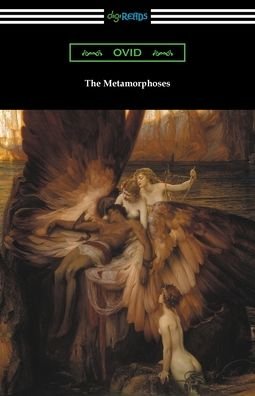
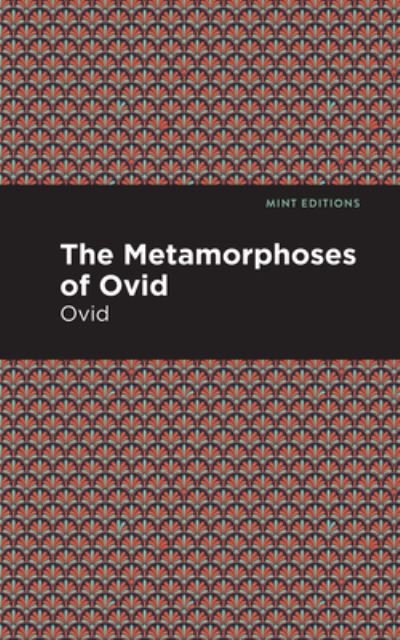
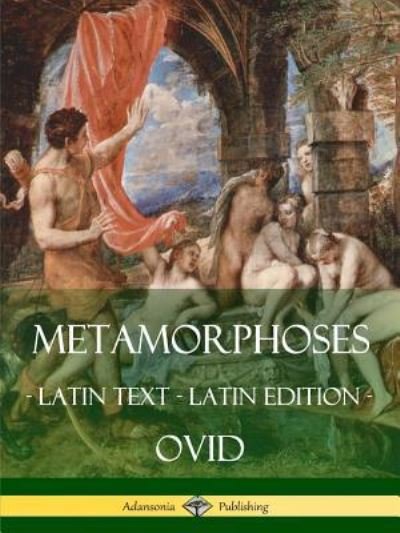
Ovid - The Metamorphoses
Pasūtīts no attālās noliktavas
 Ziemassvētku dāvanas var atgriezt līdz 31. janvārim

Mūsu klienti saka:


Ovid - The Metamorphoses
Ovid
Publius Ovidius Naso but better known to us as simply Ovid was born on 20th March 43 BC in Sulmo (modern day Sulmona) in Italy.
He was educated in rhetoric in Rome in preparation for the practice of Law. Accounts of his character say that he was emotional and not able to stay within the argumentative boundaries of rhetoric disclipine. After the early death of his brother, Ovid ceased his law studies and travelled to Athens, Asia Minor, and Sicily. He held a number of minor public posts but, around 29-25 BC began to pursue poetry, a decision that brought with it his father's disapproval.
He married three times and divorced twice by the time he was thirty years old. He fathered a daughter, who eventually bore him grandchildren. His last wife was connected to the influential gens Fabia (an ancient Roman patrician family) and would help him during his later exile.
The first decades of Ovid's literary career were mostly spent writing poetry with erotic themes. The chronology of these early works cannot, however, be relied upon.
His earliest extant work is thought to be the 'Heroides', letters of mythological heroines to absent lovers, which is believed to have been published in 19 BC.
The first five-book collection of the 'Amores', erotic poems addressed to a lover, Corinna, is believed to have been published in 16-15 BC. The surviving three book version appears to have been published c. 8-3 BC.
Between these two editions of the 'Amores' his tragedy 'Medea', which was much admired in antiquity but is no longer extant, was performed.
Ovid buoyed by his glowing reputation now increased the tempo of his writing. 'Medicamina Faciei', was followed by the 'Ars Amatoria, the Art of Love' and immediately followed by 'Remedia Amoris'. This body of elegiac, erotic poetry saw Ovid cited as the equal of the Roman elegists Gallus, Tibullus, and Propertius.
By AD 8, he had completed his most ambitious work, the 'Metamorphoses', a 15-book hexameter epic poem. It catalogued Greek and Roman mythology, from the emergence of the universe to the apotheosis of Julius Caesar.
Concurrent with this, he worked on the 'Fasti', planned as 12-books but only 6 volumes (January to June were completed) in elegiac couplets on the calendar of Roman festivals and astronomy were completed. The remaining six books were interrupted by Ovid's sentence to exile.
In AD 8, Ovid was banished to Tomis, on the Black Sea, by the Emperor Augustus. This event shadowed his life and shaped his remaining poetic output. Ovid wrote that his exile was for carmen et error - "a poem and a mistake", claiming his crime was worse than murder, more harmful than poetry.
Ovid was also a contemporary of the older Virgil and Horace, with whom he is often ranked as one of the three canonical poets of Latin literature. The Imperial scholar Quintilian considered him the last of the Latin love elegists.
His poetry was much imitated during Late Antiquity and the Middle Ages, and greatly influenced Western art and literature. The Metamorphoses remains one of the most important sources of classical mythology.
In exile, Ovid wrote 'Tristia' and 'Epistulae ex Ponto', pointedly focused on his sadness and desolation. He was far from Rome and his beloved third wife.
The five books of the elegiac Tristia, a series of poems expressing the poet's despair in exile and advocating his return to Rome, are dated to AD 9-12.
'The Ibis', an elegiac curse poem attacking an adversary at home is also dated to this period. 'The Epistulae ex Ponto', a series of letters to friends in Rome asking them to effect his return, are thought to be his last compositions.
Ovid died at Tomis in AD 17 or 18. It is thought that the Fasti, which he spent time revising, were published posthumously.
| Mediji | Grāmatas Paperback Book (Grāmata ar mīksto vāku un līmēto muguru) |
| Izlaists | 2019. gada 11. jūlijs |
| ISBN13 | 9781787806467 |
| Izdevēji | Portable Poetry |
| Lapas | 334 |
| Izmēri | 152 × 229 × 19 mm · 489 g |
| Valoda | Angļu |


![Cover for Ovid · Les Metamorphoses d'Ovide, Traduites En Prose Francoise [Par N. Renouard] (Ed.1619) - Litterature (Paperback Book) [French edition] (2022)](https://imusic.b-cdn.net/images/item/original/695/9782012577695.jpg?ovid-2022-les-metamorphoses-d-ovide-traduites-en-prose-francoise-par-n-renouard-ed-1619-litterature-paperback-book&class=scaled&v=1408612768)





![Cover for Ovid · Metamorphoses: The New, Annotated Edition (Paperback Book) [New Annotated edition] (2018)](https://imusic.b-cdn.net/images/item/original/598/9780253033598.jpg?ovid-2018-metamorphoses-the-new-annotated-edition-paperback-book&class=scaled&v=1526417315)