Pastāsti draugiem par šo preci:
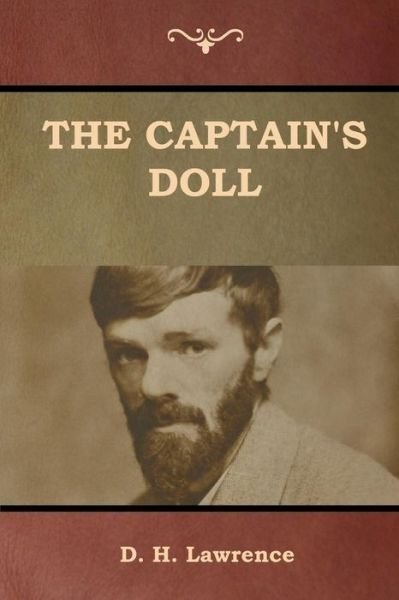
The Captain's Doll D H Lawrence
Pasūtīts no attālās noliktavas
Mūsu klienti saka:


Pieejams arī kā:
The Captain's Doll
D H Lawrence
David Herbert Lawrence (11 September 1885 - 2 March 1930) was an English writer and poet. His collected works represent, among other things, an extended reflection upon the dehumanising effects of modernity and industrialisation. Some of the issues Lawrence explores are sexuality, emotional health, vitality, spontaneity, and instinct.
Lawrence's opinions earned him many enemies and he endured official persecution, censorship, and misrepresentation of his creative work throughout the second half of his life, much of which he spent in a voluntary exile he called his "savage pilgrimage". At the time of his death, his public reputation was that of a pornographer who had wasted his considerable talents. E. M. Forster, in an obituary notice, challenged this widely held view, describing him as "the greatest imaginative novelist of our generation." The philosopher Bertrand Russell characterised Lawrence as a "proto-German Fascist". Later, the literary critic F. R. Leavis championed both his artistic integrity and his moral seriousness.
The Captain's Doll is a short story or novella by the English author D. H. Lawrence. It was written in 1921 and first published by Martin Secker in March 1923 in a volume with The Ladybird and The Fox. It was the basis of the 1983 TV film of the same name with Jeremy Irons as the Captain.
The story chronicles the journey of fallen German aristocrat Countess Johanna 'Hannele' zu Rassentlow as she dates a Scottish officer of unusual philosophy. The relationship develops into one of D. H. Lawrence's idiosyncratic 'wicked triangles'. The intimate relationship between Captain Alexander Hepburn and Hannele is intruded upon when the captain's wife Evangeline travels to Germany suspicious of foul play.
The plot unfolds with two parallel narratives; one in the symbolic domain, the other a traditional short story narrative about these protagonists. The concurrent symbolic tale that unfolds centers around the central image of The Captain's Doll-after which the story gains its title. This doll is a striking portrait of the Captain, with his "slender legs" and mesmerizing dark stare encapsulated in the silks and calico of a lifeless, inanimate object.
This doll is an ongoing motif throughout the story as it acts as a metaphor for the dehumanizing effects of war on Hepburn - an English gentleman who had been part of the war machine and in the aftermath has come to believe that "we are worth so very little". (wikipedia.org)
92 pages
| Mediji | Grāmatas Paperback Book (Grāmata ar mīksto vāku un līmēto muguru) |
| Izlaists | 2019 |
| ISBN13 | 9781644390344 |
| Izdevēji | Indoeuropeanpublishing.com |
| Lapas | 92 |
| Izmēri | 152 × 229 × 6 mm · 145 g |
| Valoda | Angļu |



![Cover for D H Lawrence · Lady Chatterley's Lover (Paperback Book) [The Unexpurgated edition] (2024)](https://imusic.b-cdn.net/images/item/original/083/9798880907083.jpg?d-h-lawrence-2024-lady-chatterley-s-lover-paperback-book&class=scaled&v=1721198063)
![Cover for D H Lawrence · Studies in Classic American Literature (Paperback Book) [Warbler Classics Annotated edition] (2023)](https://imusic.b-cdn.net/images/item/original/857/9781959891857.jpg?d-h-lawrence-2023-studies-in-classic-american-literature-paperback-book&class=scaled&v=1698756170)