Pastāsti draugiem par šo preci:
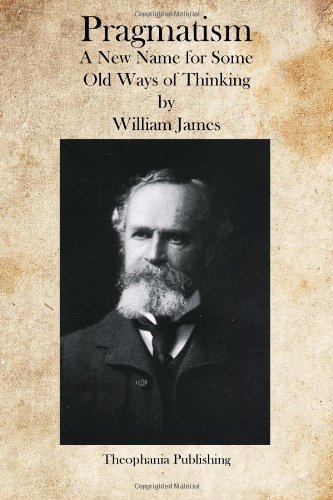
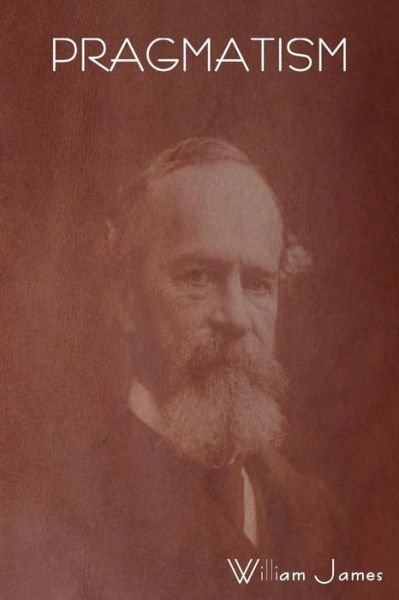
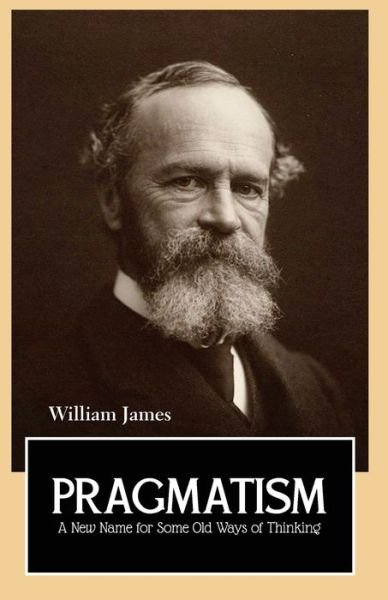
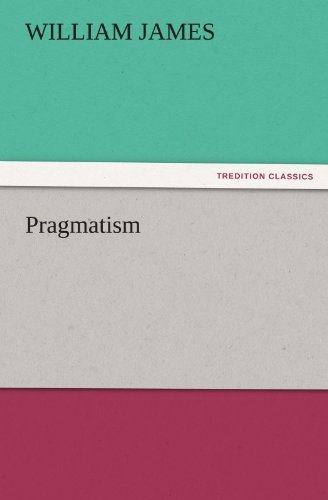
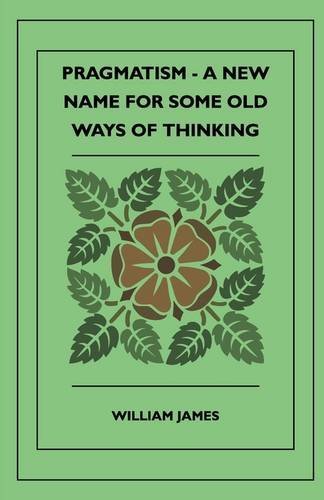
Pragmatism William James
Pasūtīts no attālās noliktavas
Mūsu klienti saka:


Pieejams arī kā:
- Paperback Book (2009) € 14,49
- Paperback Book (2011) € 14,99
- Paperback Book (2014) € 15,49
-
Paperback BookUnabridged edition(2012) € 15,49
- Paperback Book (2019) € 15,99
- Paperback Book (2010) € 16,99
- Paperback Book (2020) € 17,49
- Paperback Book (2010) € 17,99
- Paperback Book (2019) € 18,49
- Paperback Book (1991) € 18,99
- Paperback Book (2011) € 20,49
- Paperback Book (2017) € 22,99
- Paperback Book (2018) € 22,99
- Paperback Book (2009) € 24,49
- Book (2022) € 25,99
- Book (2022) € 29,99
- Hardcover Book (2018) € 35,99
- Book (2022) € 37,99
Pragmatism
William James
William James explains the pragmatic method and its consequences, advocating its usefulness in understanding what we take to be true belief. Pragmatism holds that to have a belief is to have certain rules for action. Any and every notion has its own set of practical consequences. The meaning of a thought is said to be whatever course of action necessarily follow from it. In metaphysical disputes between false and true notions, the dispute must be settled by considering the practical consequences of the two notions. Any two notions that can be shown to have identical practical consequences are shown to be identical notions. Writes James, "Whenever a dispute is serious, we ought to be able to show some practical difference that must follow from one side or the other's being right." To have a clear and complete conception of an object is equivalent to considering the practical, empirical effects and properties of the object, and the conduct it will produce. James credits Charles Peirce for introducing this way of thinking about belief. James writes that it was Peirce's notion that "To attain perfect clearness in our thoughts of an object, then, we need only consider what conceivable effects of a practical kind the object may involve- what sensations we are to expect from it, and what reactions we must prepare," and that further, "to develop a thought's meaning, we need only determine what conduct it is fitted to produce: that conduct is for us its sole significance."
| Mediji | Grāmatas Paperback Book (Grāmata ar mīksto vāku un līmēto muguru) |
| Izlaists | 2013. gada 19. jūnijs |
| ISBN13 | 9781618951038 |
| Izdevēji | Bibliotech Press |
| Lapas | 142 |
| Izmēri | 152 × 229 × 8 mm · 217 g |
| Valoda | Angļu |



![Cover for William James · The Meaning of Truth (Concise Edition) - Foundations (Paperback Book) [Concise edition] (2024)](https://imusic.b-cdn.net/images/item/original/945/9781804177945.jpg?william-james-2024-the-meaning-of-truth-concise-edition-foundations-paperback-book&class=scaled&v=1695124753)









![Cover for William James · Pragmatism (Unabridged) (Paperback Book) [Unabridged edition] (2012)](https://imusic.b-cdn.net/images/item/original/021/9781479246021.jpg?william-james-2012-pragmatism-unabridged-paperback-book&class=scaled&v=1412476620)
![Cover for William James · Pragmatism - The Works of William James (Hardcover Book) [New edition] (1975)](https://imusic.b-cdn.net/images/item/original/355/9780674697355.jpg?william-james-1975-pragmatism-the-works-of-william-james-hardcover-book&class=scaled&v=1605254492)