Pastāsti draugiem par šo preci:
Life and Death of Mr. Badman John Bunyan
Pasūtīts no attālās noliktavas
 Ziemassvētku dāvanas var atgriezt līdz 31. janvārim

Mūsu klienti saka:


Pieejams arī kā:
Life and Death of Mr. Badman
John Bunyan
The Life and Death of Mr Badman was published by John Bunyan in 1680, two years after the First Edition of the First Part of The Pilgrim's Progress. In the opening sentence of his preface he tells us it was intended by him as the counterpart or companion picture to the Allegory. But whatever his own intentions may have been, the Public of his own time seem to have declined to accept the book in this capacity. Indeed, another writer, who signs himself T. S., undertook to complete Bunyan's Allegory for him, in a book in size and type closely resembling it, and entitled The Second Part of the Pilgrim's Progress . . . exactly Described under the Similitude of a Dream. In his preface titled "The Author to the Reader," Bunyan announces that Mr Badman is a pseudonym for a real man who is dead. Mr Badman's relatives and offspring continue to populate Earth, which "reels and staggereth to and fro like a Drunkard, the transgression thereof is heavy upon it." In a mock eulogy, Bunyan says Mr Badman did not earn four themes commonly part of a funeral for a great man. First, there is no wrought image that will serve as a memorial, and Bunyan's work will have to suffice. Second, Mr Badman died without Honour, so he earned no badges and scutcheons. Third, his life did not merit a sermon. Fourth, no one will mourn and lament his death. Bunyan then describes the sort of Hell awaiting Mr Badman, citing Scripture. He said he published it to address the wickedness and debauchery that had corrupted England, as was his duty as a Christian, in hopes of delivering himself "from the ruins of them that perish." Bunyan acknowledged the work was influenced by a work by Essex minister Arthur Dent (Puritan) titled The Plaine Man's Pathway to Heaven, which was set up as a dialogue between Theologus and Philagathus. That work also had other characters, including Asunetus and Antilegon.[1] Scholar Frank Wadleigh Chandler described it as a "Puritan romance of roguery," [2] Scholar James Blanton Warey described it as an English precursor to the novel, especially the picaresque novel. John Brown of Bedford came out with a version for Cambridge University Press in 1905 that included Bunyan's The Holy War.
| Mediji | Grāmatas Paperback Book (Grāmata ar mīksto vāku un līmēto muguru) |
| Izlaists | 2016. gada 4. jūnijs |
| ISBN13 | 9781533615107 |
| Izdevēji | Createspace Independent Publishing Platf |
| Lapas | 172 |
| Izmēri | 152 × 229 × 9 mm · 235 g |
| Valoda | Angļu |




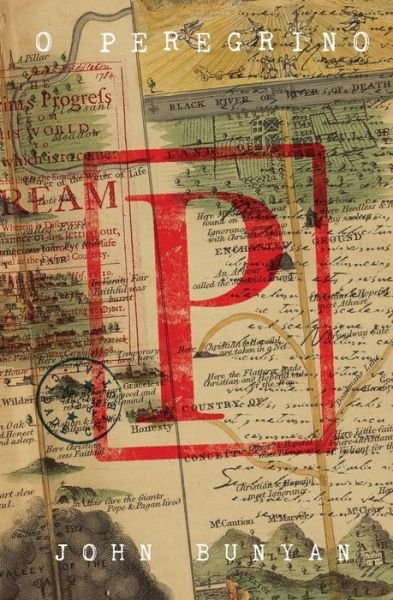
![Cover for John Bunyan · Le Pelerinage D'un Nomme Chretien: Ecrit Sous L'allegorie D'un Songe (Ed.1772) (French Edition) (Paperback Book) [French edition] (2022)](https://imusic.b-cdn.net/images/item/original/841/9782012688841.jpg?john-bunyan-2022-le-pelerinage-d-un-nomme-chretien-ecrit-sous-l-allegorie-d-un-songe-ed-1772-french-edition-paperback-book&class=scaled&v=1409704816)



![Cover for John Bunyan · The Holy War (Annotated): Easy to Read Layout (Paperback Book) [Large type / large print edition] (2021)](https://imusic.b-cdn.net/images/item/original/641/9791029912641.jpg?john-bunyan-2021-the-holy-war-annotated-easy-to-read-layout-paperback-book&class=scaled&v=1640078321)


![Cover for John Bunyan · Pilgrim's Progress, the (Paperback Book) [Worldview edition] (2019)](https://imusic.b-cdn.net/images/item/original/178/9781944503178.jpg?john-bunyan-2019-pilgrim-s-progress-the-paperback-book&class=scaled&v=1642694155)