Pastāsti draugiem par šo preci:
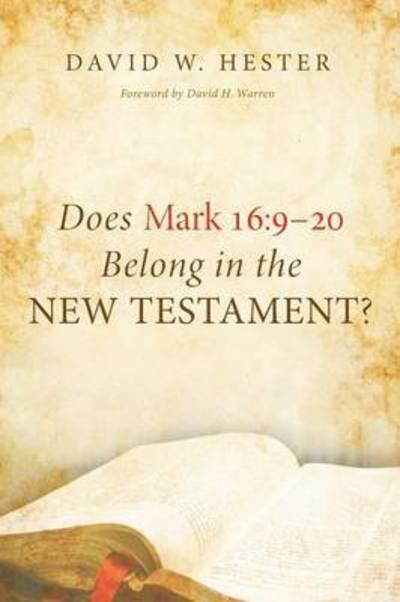
Does Mark 16: 9-20 Belong in the New Testament? David W Hester
Pasūtīts no attālās noliktavas
Mūsu klienti saka:


Does Mark 16: 9-20 Belong in the New Testament?
David W Hester
Brief Description: For almost fifty years, much has been written concerning Mark 16:9-20. During the same time period, evidence once counted against Mark 16:9-20 was shown to be otherwise. In this study, David W. Hester surveys modern scholarship (1965-2011) surrounding the passage. He examines the passage itself--the external evidence, with particular attention paid to the manuscripts and the patristics, especially those of the second and third centuries; and the internal evidence, featuring details that are problematic as well as those that favor Markan authorship. Finally, a proposal concerning the origin of the passage is presented. The first edition of Mark's Gospel ended at 16:8, resulting in the manuscript tradition that omits the passage, but this was not his intended ending. Later, his associates attached Mark's notes and published a second edition of the Gospel with the last twelve verses. This led to its inclusion. Given that the passage is cited by second- and third-century witnesses and attributed to Mark, along with the biblical prohibition against adding to or taking from Scripture, it is doubtful that an anonymous second-century author could have been successful in adding his own composition and it being widely accepted by the early church. Publisher Marketing: For almost fifty years, much has been written concerning Mark 16:9-20. During the same time period, evidence once counted against Mark 16:9-20 was shown to be otherwise. In this study, David W. Hester surveys modern scholarship (1965-2011) surrounding the passage. He examines the passage itself--the external evidence, with particular attention paid to the manuscripts and the patristics, especially those of the second and third centuries; and the internal evidence, featuring details that are problematic as well as those that favor Markan authorship. Finally, a proposal concerning the origin of the passage is presented. The first edition of Mark's Gospel ended at 16:8, resulting in the manuscript tradition that omits the passage, but this was not his intended ending. Later, his associates attached Mark's notes and published a second edition of the Gospel with the last twelve verses. This led to its inclusion. Given that the passage is cited by second- and third-century witnesses and attributed to Mark, along with the biblical prohibition against adding to or taking from Scripture, it is doubtful that an anonymous second-century author could have been successful in adding his own composition and it being widely accepted by the early church. ""Dr. Hester's position on Mark 16:9-20 differs from the prevailing view that these twelve verses are not part of the original Gospel of Mark. After setting forth his arguments against their authenticity, he passionately presents the case for the other side--citing evidence he is convinced will persuade the open-minded critic that to omit these verses is to omit a part of Scripture."" --Rodney E. Cloud, Dean of the Turner School of Theology, Amridge University ""Though covering well-worn ground, Dr. Hester highlights historical clues often overlooked or even ignored. If Mark 16:9 20 was added to the text, then why did no early Christian writer ever voice any opposition? Why did the early church tacitly accept these verses as canonical? This careful and thorough review of the ancient evidence and of modern scholarship helped me reexamine the whole question afresh."" --David H. Warren, Associate Professor of Biblical Studies, Faulkner University David W. Hester is Lecturer for the V. P. Black College of Biblical Studies and the F. Furman Kearley Graduate School of Theology at Faulkner University in Montgomery, Alabama. He is the director of the Faulkner Bible Lectureship, and coeditor of the graduate journal, . He is the author of two books: Among the Scholars (1994) and Tampering With Truth (2007)."
Contributor Bio: Hester, David W David W. Hester is Lecturer for the V. P. Black College of Biblical Studies and the F. Furman Kearley Graduate School of Theology at Faulkner University in Montgomery, Alabama. He is the director of the Faulkner Bible Lectureship, and coeditor of the graduate journal, . He is the author of two books: Among the Scholars (1994) and Tampering With Truth (2007). Contributor Bio: Warren, David H David W. Hester is Lecturer for the V. P. Black College of Biblical Studies and the F. Furman Kearley Graduate School of Theology at Faulkner University in Montgomery, Alabama. He is the director of the Faulkner Bible Lectureship, and coeditor of the graduate journal, . He is the author of two books: Among the Scholars (1994) and Tampering With Truth (2007).
| Mediji | Grāmatas Paperback Book (Grāmata ar mīksto vāku un līmēto muguru) |
| Izlaists | 2015. gada 19. marts |
| ISBN13 | 9781498201582 |
| Izdevēji | Wipf & Stock Publishers |
| Lapas | 178 |
| Izmēri | 150 × 226 × 10 mm · 272 g |
| Valoda | Angļu |


