Pastāsti draugiem par šo preci:
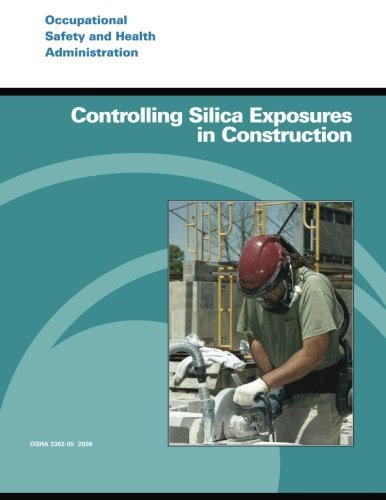
Controlling Silica Exposures in Construction Occupational Safety and Health Administration
Pasūtīts no attālās noliktavas
Mūsu klienti saka:


Controlling Silica Exposures in Construction
Occupational Safety and Health Administration
This guidance document addresses the control of employee exposures to respirable dust containing crystalline silica, which is known to cause silicosis, a serious lung disease, as well as increase the risk of lung cancer and other systemic diseases. This document provides information on the effectiveness of various engineering control approaches for several kinds of construction operations and equipment, and contains recommendations for work practices and respiratory protection, as appropriate. Quartz is the most common form of crystalline silica. In fact, it is the second most common surface material accounting for almost 12% by volume of the earth?s crust. Quartz is present in many materials in the construction industry, such as brick and mortar, concrete, slate, dimensional stone (granite, sandstone), stone aggregate, tile, and sand used for blasting. Other construction materials that contain crystalline silica are asphalt filler, roofing granules, plastic composites, soils, and to a lesser extent, some wallboard joint compounds, paint, plaster, caulking and putty. Cristobalite, a less common form of crystalline silica, is formed at high temperatures (>1,470°C) in nature and by industrial processes. The ceramic and brick lining of boilers and vessels, some ceramic tiles, and volcanic ash contain cristobalite. The recommendations presented in this document are based on a review of information in the published literature, NIOSH In-Depth Survey Reports and OSHA inspection data. Engineering control evaluations reported in the published literature were generally performed in controlled work environments and may not reflect actual workplace exposures experienced at construction worksites. Moreover, potential silica exposure levels will depend on the concentration of silica in materials at construction sites, as well as factors in the work environment (such as enclosed, semi-enclosed, or open spaces and/or multiple operations generating silica dust) as well as environmental conditions (such as wind direction and speed). Therefore, OSHA encourages employers to conduct periodic exposure monitoring to confirm that engineering and work practice controls are effective and that appropriate respiratory protection is being used where necessary. Controls continue to evolve and OSHA encourages equipment suppliers and contractors to work with industrial hygienists to evaluate new designs and products to obtain objective information that can be used to evaluate performance and support informed decisions on use.
| Mediji | Grāmatas Paperback Book (Grāmata ar mīksto vāku un līmēto muguru) |
| Izlaists | 2014. gada 26. februāris |
| ISBN13 | 9781496082138 |
| Izdevēji | CreateSpace Independent Publishing Platf |
| Lapas | 72 |
| Izmēri | 4 × 216 × 279 mm · 190 g |
| Valoda | Angļu |