Pastāsti draugiem par šo preci:
Troilus and Cressida William Shakespeare
Mūsu klienti saka:


Pieejams arī kā:
- Paperback Book (2022) € 9,99
-
Paperback Book2nd edition(2002) € 11,49
- Paperback Book (2015) € 12,99
-
Paperback Book1. izdevums(2014) € 13,99
- Paperback Book (2018) € 13,99
- Paperback Book (2017) € 14,99
- Paperback Book (2016) € 16,49
- Paperback Book (2017) € 16,49
- Paperback Book (2016) € 16,49
- Paperback Book (2017) € 16,49
- Paperback Book (2012) € 16,99
- Paperback Book (2012) € 16,99
- Paperback Book (2019) € 16,99
- Paperback Book (2016) € 17,49
-
Paperback BookReprint edition(2010) € 17,49
- Paperback Book (2015) € 18,49
- Paperback Book (2017) € 18,49
- Paperback Book (2015) € 18,49
- Paperback Book (2017) € 18,99
- Hardcover Book (2012) € 20,99
- Hardcover Book (2012) € 23,49
- Paperback Book (2017) € 23,99
- Paperback Book (2017) € 24,49
- Paperback Book (2026) € 25,49
- Paperback Book (2018) € 27,99
Troilus and Cressida
William Shakespeare
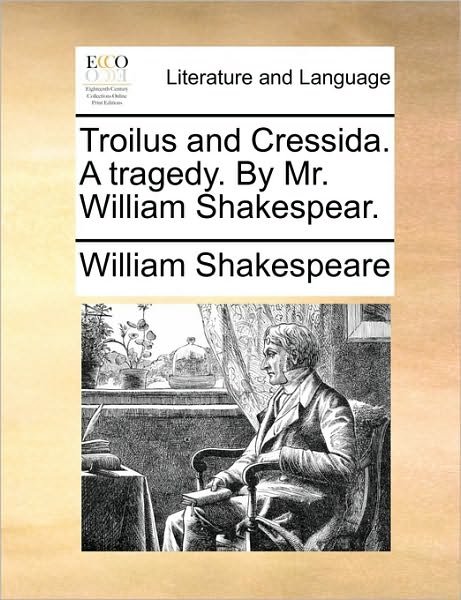
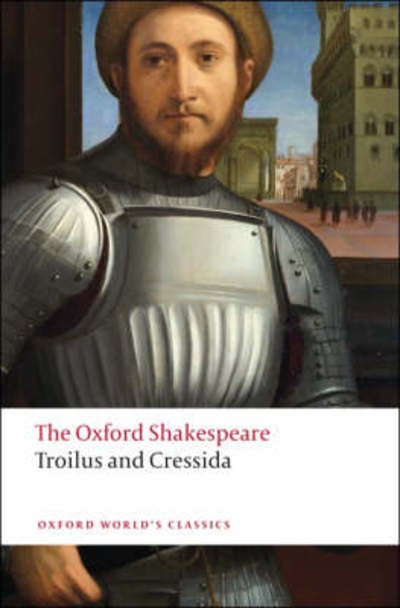
Troilus and Cressida is a tragedy by William Shakespeare, believed to have been written in 1602. It was also described by Frederick S. Boas as one of Shakespeare's problem plays. The play ends on a very bleak note with the death of the noble Trojan Hector and destruction of the love between Troilus and Cressida. Throughout the play, the tone lurches wildly between bawdy comedy and tragic gloom, and readers and theatre-goers have frequently found it difficult to understand how one is meant to respond to the characters. In the seventh year of the Trojan War, a Trojan prince named Troilus falls in love with Cressida, who is the daughter of Calchas, a Trojan priest who has defected to the Greek side. Troilus is assisted in his pursuit of her by Pandarus, Cressida's uncle. Meanwhile, in the Greek camp, the Greek general, Agamemnon, wonders why his commanders seem so downcast and pessimistic. The wise and crafty Ulysses informs him that the army's troubles spring from a lack of respect for authority, brought about by the behavior of Achilles, the greatest Greek warrior, who refuses to fight and instead spends his time sitting in his tent with his comrade (and dearest friend) Patroclus, mocking his superiors. Shortly thereafter, a challenge to single combat arrives from Prince Hector, the greatest Trojan warrior, and Ulysses decides to have Ajax, a headstrong fool, fight Hector instead of Achilles, in the hopes that this snub will wound Achilles's pride and bring him back into the war. In Troy, the sons of King Priam debate whether it is worthwhile to continue the war?or whether they should return Helen to the Greeks and end the struggle. Hector argues for peace, but he is won over by the impassioned Troilus, who wants to continue the struggle. In the Greek camp, Thersites, Ajax's foul-mouthed slave, abuses everyone who crosses his path. His master, meanwhile, has been honored by the commanders over the sulking Achilles, and is to fight Hector the next day. The play's puzzling and intriguing nature has meant that Troilus and Cressida has rarely been popular on stage, and neither during Shakespeare's own lifetime nor between 1734 and 1898 is there any recorded performance of the play. In the Restoration, it was rewritten by John Dryden, who stated that he intended to uncover the "jewels" of Shakespeare's verse, hidden beneath a "heap of rubbish" (not only some "ungrammatical" and indecorous expressions, but also much of the plot). In addition to his "improvements" to the language, Dryden streamlined the council scenes and sharpened the rivalry between Ajax and Achilles. Dryden's largest change, though, was in the character of Cressida, who in his play is loyal to Troilus throughout. The play was also condemned by the Victorians for its explicit sexual references (though the sex, while explicitly and importantly present, is portrayed satirically and highly negatively). It was not staged in its original form until the early 20th century, but since then, it has become increasingly popular, especially after the First World War, owing to its cynical depiction of immorality and disillusionment. Because certain aspects of the play, such as the breaking of one's public oaths during a protracted wartime and the decay of morality among Cressida and the Greeks resonated strongly with a discontented public, the play was staged with greater frequency during and after this period.
| Mediji | Grāmatas Paperback Book (Grāmata ar mīksto vāku un līmēto muguru) |
| Izlaists | 2014. gada 23. februāris |
| ISBN13 | 9781496054616 |
| Izdevēji | CreateSpace Independent Publishing Platf |
| Lapas | 160 |
| Izmēri | 9 × 156 × 234 mm · 235 g |
| Valoda | Angļu |



![Cover for William Shakespeare · Othello: Third Norton Critical Edition - Norton Critical Editions (Paperback Book) [Third edition] (2026)](https://imusic.b-cdn.net/images/item/original/270/9781324072270.jpg?william-shakespeare-2026-othello-third-norton-critical-edition-norton-critical-editions-paperback-book&class=scaled&v=1788182002)


![Cover for William Shakespeare · Troilus and Cressida (Modern Library Classics) (Paperback Book) [Reprint edition] (2010)](https://imusic.b-cdn.net/images/item/original/313/9780812969313.jpg?william-shakespeare-2010-troilus-and-cressida-modern-library-classics-paperback-book&class=scaled&v=1409851952)

![Cover for William Shakespeare · Troilus and Cressida - The New Cambridge Shakespeare (Hardcover Book) [2 Revised edition] (2017)](https://imusic.b-cdn.net/images/item/original/449/9781107130449.jpg?william-shakespeare-2017-troilus-and-cressida-the-new-cambridge-shakespeare-hardcover-book&class=scaled&v=1465483257)
![Cover for William Shakespeare · Troilus and Cressida - The New Cambridge Shakespeare (Paperback Book) [2 Revised edition] (2017)](https://imusic.b-cdn.net/images/item/original/426/9781107571426.jpg?william-shakespeare-2017-troilus-and-cressida-the-new-cambridge-shakespeare-paperback-book&class=scaled&v=1504008916)
![Cover for William Shakespeare · Troilus and Cressida - The Pelican Shakespeare (Paperback Book) [Revised edition] (2000)](https://imusic.b-cdn.net/images/item/original/869/9780140714869.jpg?william-shakespeare-2000-troilus-and-cressida-the-pelican-shakespeare-paperback-book&class=scaled&v=1409634844)