Pastāsti draugiem par šo preci:
Meno Plato
Pasūtīts no attālās noliktavas
Mūsu klienti saka:


Pieejams arī kā:
- Paperback Book (2011) € 11,99
- Paperback Book (2018) € 13,49
- Paperback Book (2015) € 13,99
- Paperback Book (2014) € 13,99
- Paperback Book (2018) € 13,99
- Paperback Book (2017) € 14,49
- Paperback Book (2019) € 14,49
- Paperback Book (2015) € 14,99
- Paperback Book (2018) € 14,99
- Paperback Book (2009) € 14,99
- Paperback Book (2016) € 15,49
- Paperback Book (2010) € 15,49
- Paperback Book (2013) € 15,49
- Paperback Book (2016) € 17,49
- Paperback Book (2016) € 17,49
- Paperback Book (2016) € 17,49
- Paperback Book (2017) € 18,99
- Paperback Book (2013) € 19,99
- Paperback Book (2008) € 20,49
- Book (2025) € 22,49
- Paperback Book (2004) € 27,99
- Book (2025) € 31,49
- Hardcover Book (2009) € 35,99
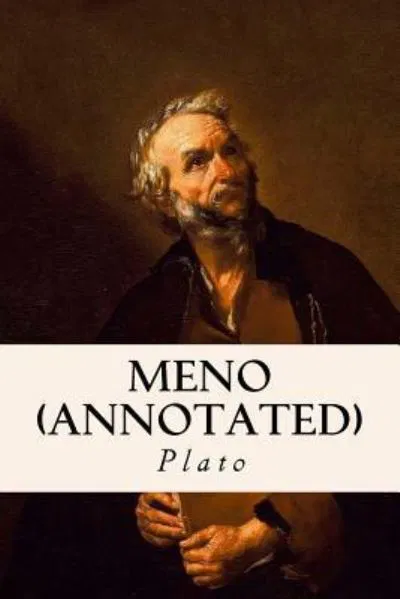
Meno
Plato
This Dialogue begins abruptly with a question of Meno, who asks, 'whether virtue can be taught.' Socrates replies that he does not as yet know what virtue is, and has never known anyone who did. 'Then he cannot have met Gorgias when he was at Athens.' Yes, Socrates had met him, but he has a bad memory, and has forgotten what Gorgias said. Will Meno tell him his own notion, which is probably not very different from that of Gorgias? 'O yes?nothing easier: there is the virtue of a man, of a woman, of an old man, and of a child; there is a virtue of every age and state of life, all of which may be easily described.' Socrates reminds Meno that this is only an enumeration of the virtues and not a definition of the notion which is common to them all. In a second attempt Meno defines virtue to be 'the power of command.' But to this, again, exceptions are taken. For there must be a virtue of those who obey, as well as of those who command; and the power of command must be justly or not unjustly exercised. Meno is very ready to admit that justice is virtue: 'Would you say virtue or a virtue, for there are other virtues, such as courage, temperance, and the like; just as round is a figure, and black and white are colours, and yet there are other figures and other colours. Let Meno take the examples of figure and colour, and try to define them.' Meno confesses his inability, and after a process of interrogation, in which Socrates explains to him the nature of a 'simile in multis,' Socrates himself defines figure as 'the accompaniment of colour.' But some one may object that he does not know the meaning of the word 'colour;' and if he is a candid friend, and not a mere disputant, Socrates is willing to furnish him with a simpler and more philosophical definition, into which no disputed word is allowed to intrude: 'Figure is the limit of form.' Meno imperiously insists that he must still have a definition of colour. Some raillery follows; and at length Socrates is induced to reply, 'that colour is the effluence of form, sensible, and in due proportion to the sight.'
| Mediji | Grāmatas Paperback Book (Grāmata ar mīksto vāku un līmēto muguru) |
| Izlaists | 2012. gada 8. marts |
| ISBN13 | 9781475006599 |
| Izdevēji | CreateSpace Independent Publishing Platf |
| Lapas | 84 |
| Izmēri | 150 × 5 × 226 mm · 127 g |
| Valoda | Angļu |
| Ieguldītājs | Benjamin Jowett |




![Cover for Plato · The Republic [illustrated Edition] (Paperback Book) (2024)](https://imusic.b-cdn.net/images/item/original/405/9781434465405.jpg?plato-2024-the-republic-illustrated-edition-paperback-book&class=scaled&v=1497212240)


![Cover for Plato · The Republic: The Essential Philosophical Dialogue (Concise Edition) - Foundations (Paperback Book) [Concise edition] (2024)](https://imusic.b-cdn.net/images/item/original/938/9781804177938.jpg?plato-2024-the-republic-the-essential-philosophical-dialogue-concise-edition-foundations-paperback-book&class=scaled&v=1695111621)