Pastāsti draugiem par šo preci:
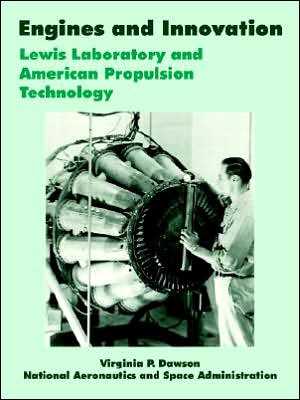
Engines and Innovation: Lewis Laboratory and American Propulsion Technology Author Virginia P Dawson
Pasūtīts no attālās noliktavas
Mūsu klienti saka:


Engines and Innovation: Lewis Laboratory and American Propulsion Technology
Author Virginia P Dawson
When Francis Bacon wrote the New Atlantis in the early 17th century, he envisioned a state-supported research institution in which knowledge could be applied to 'enlarge the bounds of Human Empire, to the effecting of all things possible." Among the research facilities to increase the protection and material comforts of the inhabitants of his imaginary island, Bacon imagined an Engine House to study all types of motion, including flight. National aeronautical research laboratories in Europe and the United States in the early 20th century reflected Bacon's vision of science applied to the practical problems of flight. Commitment to innovation accompanied Bacon's belief in progress. His utopia honored inventors, not politicians or academics. In 1941 the same commitment to innovation and industrial progress won federal funding for a laboratory in Cleveland, Ohio. Local and national leaders expected the new laboratory to promote innovations in aircraft engine technology to help win the war against Germany. Contributions to the development of superior engines for military and passenger aircraft after World War II justified the large federal investment in research facilities and personnel. Today this laboratory is the NASA Lewis Research Center. In contrast to the isolation of the ideal research institution of Bacon's vision, Lewis took shape in a flesh-and-blood world of personalities, national security concerns, and postwar capitalism. Two transitions, both precipitated by advances in propulsion technology, provide the structure for my history: the revolution in jet propulsion during World War II, and the launch of Sputnik in October 1957. Each had significant national political, military, and economic repercussions. Each forced the laboratory to restructure its research program and to redefine its relationships with its three constituencies--the military, industry, and academia. Within this framework I have distinguished one theme that recurs throughout the laboratory's history--the tension between fundamental or basic research and development. In the process of writing my history I found that these terms could not be defined in any absolute sense. Their meaning is enmeshed in the history of Lewis, and the definitions of research and development changed as Lewis evolved. As an institution, Lewis engaged in a continuing reevaluation of its role within the American propulsion community and, after the formation of NASA in 1958, within a vastly expanded federal bureaucracy.
288 pages
| Mediji | Grāmatas Paperback Book (Grāmata ar mīksto vāku un līmēto muguru) |
| Izlaists | 2005. gada 14. februāris |
| ISBN13 | 9781410220387 |
| Izdevēji | University Press of the Pacific |
| Lapas | 288 |
| Izmēri | 210 × 279 × 15 mm · 653 g |
| Valoda | Angļu |







![Cover for William Joseph Snelling · Tales of the Northwest: Sketches of Indian Life and Character by a Resident Beyond the Frontier (Paperback Book) [2nd edition] (2006)](https://imusic.b-cdn.net/images/item/original/580/9781410225580.jpg?william-joseph-snelling-2006-tales-of-the-northwest-sketches-of-indian-life-and-character-by-a-resident-beyond-the-frontier-paperback-book&class=scaled&v=1439405562)