Pastāsti draugiem par šo preci:
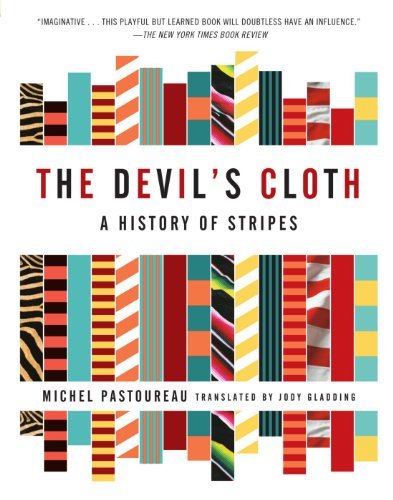
The Devil's Cloth: a History of Stripes Michel Pastoureau Reprint edition
Pasūtīts no attālās noliktavas
 Ziemassvētku dāvanas var atgriezt līdz 31. janvārim

Mūsu klienti saka:


The Devil's Cloth: a History of Stripes
Michel Pastoureau
To stripe a surface serves to distinguish it, to point it out, to oppose it or associate it with another surface, and thus to classify it, to keep an eye on it, to verify it, even to censor it.
Throughout the ages, the stripe has made its mark in mysterious ways. From prisoners' uniforms to tailored suits, a street sign to a set of sheets, Pablo Picasso to Saint Joseph, stripes have always made a bold statement. But the boundary that separates the good stripe from the bad is often blurred. Why, for instance, were stripes associated with the devil during the Middle Ages? How did stripes come to symbolize freedom and unity after the American and French revolutions? When did the stripe become a standard in men's fashion? "In the stripe," writes author Michel Pastoureau, "there is something that resists enclosure within systems." So before putting on that necktie or waving your country's flag, look to The Devil's Cloth for a colorful history of the stripe in all its variety, controversy, and connotation.
| Mediji | Grāmatas Paperback Book (Grāmata ar mīksto vāku un līmēto muguru) |
| Izlaists | 2003. gada 3. jūnijs |
| ISBN13 | 9780743453264 |
| Izdevēji | Washington Square Press |
| Lapas | 144 |
| Izmēri | 140 × 177 × 10 mm · 145 g |
| Valoda | Angļu |
| Ieguldītājs | Jody Gladding |
Vairāk no Michel Pastoureau



Vairāk no šīs sērijas
Vairāk no tā paša izdevēja







Skatīt visus Michel Pastoureau