Pastāsti draugiem par šo preci:
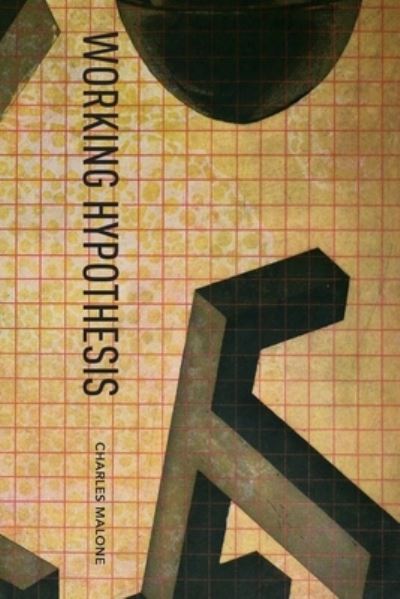
Working Hypothesis Charles Malone
Pasūtīts no attālās noliktavas
Mūsu klienti saka:


Working Hypothesis
Charles Malone
The poems in Working Hypothesis celebrate curiosity. They revel in the discoveries of Natural Science as well as the hoaxes and scientific jokes that litter our history of knowing. These are the product of Charles Malone's rural upbringing and connection to the natural world, his family's passed-down bookishness, and his mother's work as a chemist. Poems like "Beneficial Insects" and "Papilio Ecclipses" look to the intersections of these ideas with our most intimate personal relationships. The poem "About the River" comes from Malone's work using poetry writing in the community to talk about the history of the Cuyahoga River. These pieces balance intellectual searching with domestic moments of childhood, marriage, and the making of a home.
Amid his wonder for the natural world, Malone's poems also grow from doubt. We have painted butterfly's wings to claim a new species, imagined animals that burst from the seeds of plants, and written of man-eating trees in the jungle of Madagascar. We have lied to and amused ourselves. We have made mistakes. "Adecula Ridiculi" considers the metaphors offered by a typo that bred a fake history of a temple constructed to mock Hannibal's failed siege of Rome. "Jokes of Nature / Jokes of Knowledge" and "Truthfully" catalog a cabinet of curiosities in the history of Natural Science, and "The Man-Eating Tree of Madagascar" imagines that lie as something akin to the way an older sibling might mislead a younger one.
The final section of the book, "Experiments & Tricks" draws from Robert J. Brown's 333 Science Tricks & Experiments. Brown's 1984 book offers up an abundance of ideas to bring science into the home. This infusion of metaphor and vocabulary invites us to consider the simple act of counting the seconds between lightning and thunder differently in "How Far the Storm?" This poem connects to the history of Malone's home town, Kent, Ohio, and the shootings on the campus in 1970. He writes, "We can count the seconds between / explosions. / We can feel them in our teeth. / Even as one voice says / a storm is coming, another says it isn't." Other experiments inspire "Mirror Tricks," "Smoke from the Fingertips," and "Ghost Light." In all, these poems encourage us all to follow our questions and our doubts. They invite us into overservation and to be childlike in embracing our curiosity.
| Mediji | Grāmatas Paperback Book (Grāmata ar mīksto vāku un līmēto muguru) |
| Izlaists | 2020. gada 2. oktobris |
| ISBN13 | 9781646622948 |
| Izdevēji | Finishing Line Press |
| Lapas | 82 |
| Izmēri | 152 × 229 × 5 mm · 131 g |
| Valoda | Angļu |
Vairāk no Charles Malone
Rādīt visu


Mere med samme udgiver


![Cover for Martin Galvin · Circling out (Book) [1st edition] (2023)](https://imusic.b-cdn.net/images/item/original/456/9781599241456.jpg?martin-galvin-2023-circling-out-book&class=scaled&v=1697795965)


Skatīt visus Charles Malone ( piem., Paperback Book )